· Web Architecture · 7 min read
Agentic AI in 2026: Engineering Autonomous Workflows
A technical analysis of the 2026 pivot from Generative AI chat to Agentic AI workflows, covering Gemini 3 Pro's long context, Microsoft's model orchestration, and new governance frameworks.

TL;DR: The 2026 enterprise AI landscape has pivoted decisively from generative chat interfaces to Agentic AI systems capable of executing complex, multi-step workflows autonomously. This shift, marked by major platform updates from Google and Microsoft, demands new architectural approaches centred on dynamic model orchestration, robust governance, and native third-party data grounding.
Introduction: The Architectural Imperative
The fundamental challenge with late-2024’s generative AI was its transactional nature. An engineer could request code, a marketer a blog outline, but each interaction was a discrete, one-shot event requiring constant human oversight. The system possessed no memory of past requests, no ability to chain actions across applications, and no understanding of organisational context beyond a single prompt. This created a ceiling on productivity gains and left complex, multi-system business processes untouched by automation.
The 2026 pivot, evidenced by concurrent updates from Microsoft and Google, directly addresses this limitation. It represents an architectural evolution from isolated, stateless chat completion to persistent, stateful Agentic AI systems. These systems are engineered to understand intent, decompose it into sequential tasks, execute those tasks across disparate SaaS platforms using grounded enterprise data, and learn from feedback loops—all with minimal human intervention. This transition is not merely a feature add-on; it is a foundational reorganisation of how AI integrates with enterprise software stacks.
What is Agentic AI?
Agentic AI refers to artificial intelligence systems engineered to autonomously perform multi-step, goal-oriented tasks by reasoning, planning, and executing actions across software environments. Unlike traditional generative AI, which responds to single prompts, Agentic AI maintains persistent sessions, leverages long-term memory and context, and can orchestrate workflows involving data retrieval, analysis, content creation, and system interaction without continuous user input. Its core value lies in shifting the human role from micro-manager to strategic overseer, enabling the automation of entire business processes.
The 2026 Architectural Shift: Model Orchestration vs. Context Mastery
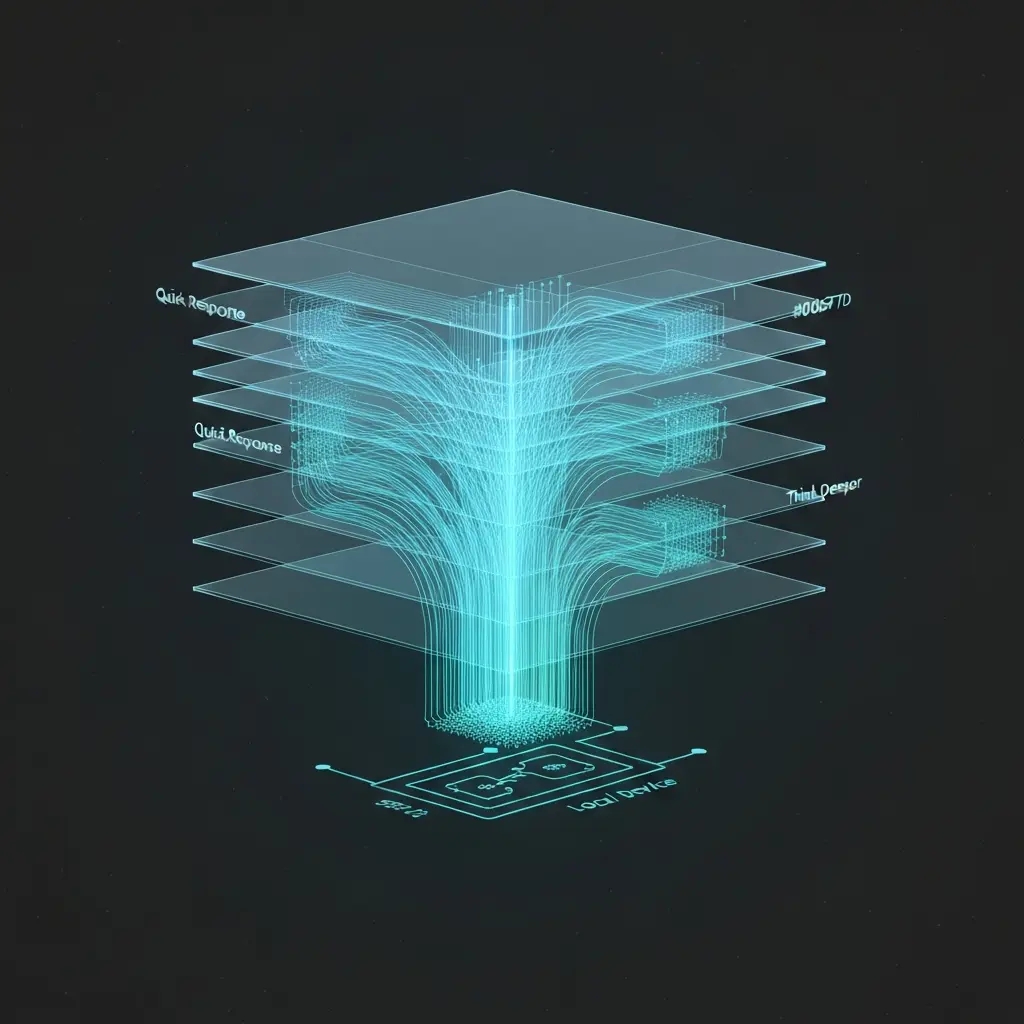
The first major divergence in 2026’s Agentic AI implementations is at the foundational model layer. Google’s approach with Gemini 3 Pro centres on monumental context windows—1 million tokens, scaling to 2 million. This allows the ingestion of entire codebases, lengthy legal documents, or full project histories as a single, coherent context. The architectural implication is profound: an agent can reference any part of this vast corpus without the latency or potential information loss of a retrieval step.
In contrast, Microsoft 365 Copilot has evolved into a dynamic multi-model orchestrator. It routes reasoning tasks between different specialised models (e.g., GPT-4.1-class for text, dedicated models for code or complex reasoning) based on prompt complexity and latency requirements. This system relies heavily on Retrieval-Augmented Generation (RAG) for grounding, operating within a more constrained 32k to 128k token window but fetching relevant information from enterprise knowledge bases on demand.
Pro Tip: For tasks requiring deep, consistent reasoning within a single large corpus (e.g., refactoring a monolithic codebase), the long-context approach reduces architectural complexity. For dynamic environments where data sources are constantly updated (e.g., live CRM and project management tools), a well-tuned RAG-based orchestration layer may offer more current and precise grounding.
Why Does Native SaaS Grounding Change Everything?
The February 2026 update to Gemini Enterprise, introducing public preview grounding for HubSpot, Monday.com, and Shopify, is a watershed moment. Previously, integrating AI with cross-platform data required building and maintaining custom middleware to sync, transform, and secure data streams. This introduced significant development overhead, latency, and points of failure.
Native grounding eliminates this middleware layer. An agent can now directly query a live Shopify order database, cross-reference it with a HubSpot customer profile, and update a Monday.com project timeline—all within a single, governed session. The architectural simplification is dramatic, moving from a distributed, bespoke integration mesh to a centralised, platform-managed data plane.
# Example Pseudo-API call demonstrating the simplicity of native grounding
# This is illustrative of the concept, not a production SDK call.
agent_session = GeminiEnterpriseSession(
    grounding_sources=[
        {"source": "hubspot", "object_type": "contact", "filter": "company_id=12345"},
        {"source": "shopify", "object_type": "order", "filter": "last_30_days"}
    ]
)

response = agent_session.execute(
    task="Identify top-spending customers from the last month and draft a renewal proposal based on their support ticket history."
)
# The agent autonomously fetches live data, correlates it, and executes the workflow.
As per the Gemini API documentation, this feature fundamentally changes the agent design pattern, moving data access from a pre-processing step to an inline capability.
Governing the Autonomous Workforce: The New Security Paradigm
As Agentic AI systems gain the ability to act autonomously across sensitive data sources, traditional Identity and Access Management (IAM) is no longer sufficient. Microsoft’s March 2026 integration of an AI agent inventory into Microsoft Defender, linked with Purview compliance policies, highlights the new security paradigm: risk-based, behavioural governance.
The core risk is “oversharing”—where an agent, operating under a user’s permissions but with broader access patterns, might surface sensitive data from a misconfigured SharePoint folder into a PowerPoint deck intended for a wide audience. Defender’s new capability models an agent’s potential data access paths, identifies risky permutations based on sensitivity labels and user context, and can trigger automated remediation via Purview.
This shifts security left in the AI development lifecycle. Engineers must now design agents with explicit data handling policies and integrate with these governance frameworks from the outset. The agent itself becomes a new identity to manage, audit, and control.
The 2026 Outlook: Standardised A2A and Vertical Bundling
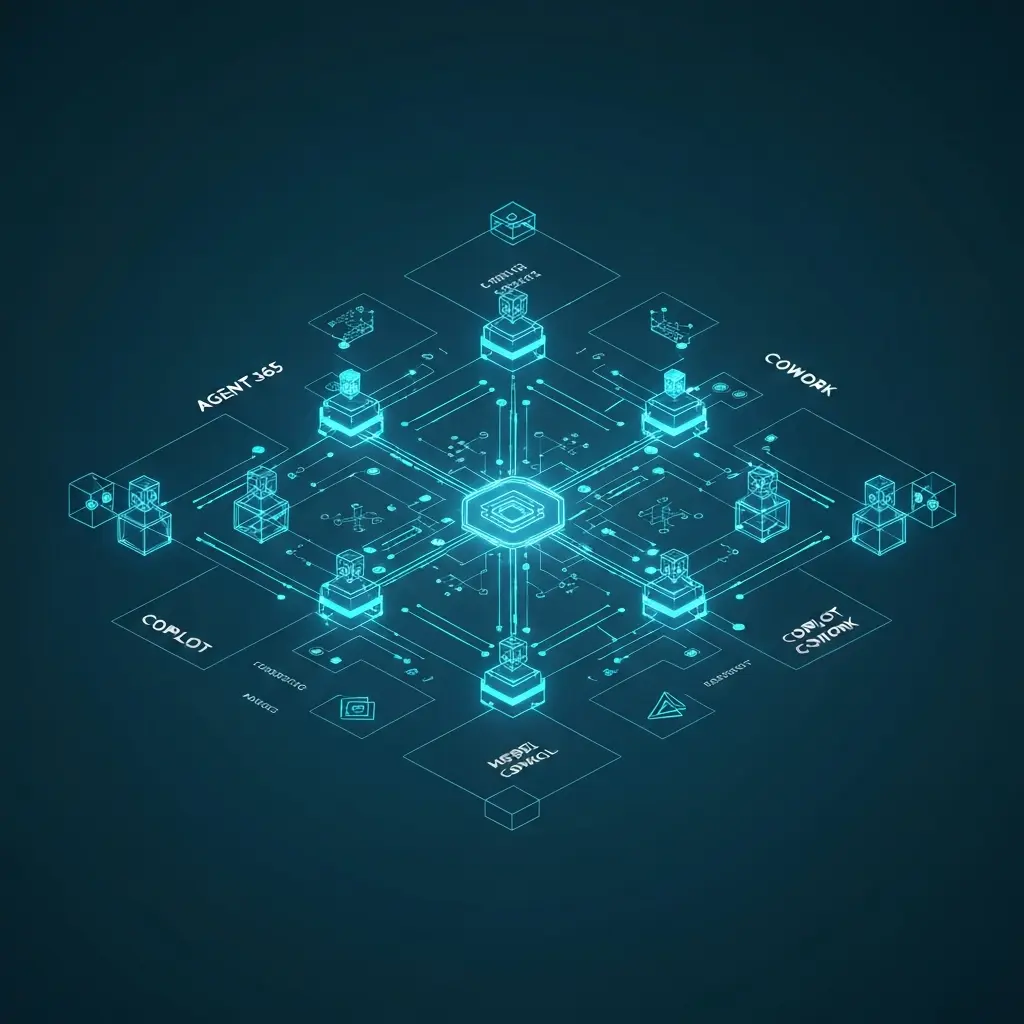
The architectural trajectory for the remainder of 2026 points towards two key developments. First, the standardisation of Agent-to-Agent (A2A) communication protocols, as previewed in Google’s ADK and Microsoft’s Copilot Studio, will mature. We will see the emergence of internal agent registries and delegation frameworks, allowing specialised agents (e.g., a “data analysis agent,” a “content creation agent”) to hand off tasks seamlessly, creating complex, cross-departmental automation chains.
Second, the licensing and TCO shift is profound. Microsoft’s move to “AI-First” bundles and Google’s “AI-by-default” strategy signal the end of AI as a discrete, paid add-on. AI capabilities will become the inherent, bundled fabric of enterprise SaaS. This will accelerate adoption but force a consolidation of agent ecosystems, as seen with Microsoft retiring its “Skills agent” in favour of integrated “Workforce Insights.” The competitive battleground will shift from who has the best chat to who provides the most coherent, efficient, and governable autonomous workflows.
Key Takeaways
- Architect for Orchestration: The choice between long-context single models and dynamic multi-model orchestration is fundamental and should be driven by your primary data structure and freshness requirements.
- Eliminate Middleware: Prioritise AI platforms offering native grounding for your core SaaS tools (CRM, ERP, CMS) to drastically reduce integration complexity and latency.
- Govern the Agent, Not Just the User: Implement agent-centric security frameworks that audit data access patterns and prevent autonomous oversharing risks.
- Design for Hand-offs: Begin modelling internal processes as sequences of tasks that could be delegated between specialised, registered agents (A2A).
- Budget for Bundling: Anticipate that AI functionality will cease to be a line-item cost and will instead be absorbed into core platform licensing, affecting total cost of ownership calculations.
Conclusion: Engineering for Autonomy
The transition from generative chat to Agentic AI represents the most significant evolution in enterprise software automation since the advent of the API. It demands a commensurate shift in engineering philosophy—from building applications that respond to commands, to designing systems that pursue outcomes. Success will hinge on selecting platforms whose architectural strengths (be it context mastery or dynamic orchestration) align with your operational DNA, and on implementing the robust governance required for trustworthy autonomy. At Zorinto, we are helping clients navigate this pivot by architecting the secure, integrated agentic backbones that turn this potential into reliable, scalable business advantage.