· Web Architecture · 7 min read
Agentic Orchestration: The 2026 Shift from Chat to Multi-Step AI
A technical analysis of how Microsoft's Wave 3 and Google's Workspace Studio are redefining enterprise automation through multi-step, reasoning-driven AI workflows.

TL;DR: The 2026 landscape has shifted from assistive chat to agentic orchestration. Microsoft’s Wave 3 and Google’s Workspace Studio now execute complex, multi-step workflows autonomously. This architectural change requires new considerations for governance, grounding, and systems integration to unlock genuine enterprise productivity.
For years, enterprise AI presented a fundamental architectural contradiction: the promise of automation was delivered through a deeply manual, chat-centric interface. Senior engineers were tasked with building complex systems while interfacing with AI via a glorified text box. The 2026 announcements from Microsoft and Google represent a decisive correction, pivoting from reactive chat to proactive, plan-driven execution. The core problem they address is the coordination gap—the manual effort required to bridge intent across disparate applications like Dynamics 365, Sheets, or Salesforce. Agentic orchestration is the new architectural paradigm, where AI agents formulate plans, execute sequences of actions, and navigate conditional logic across your application stack, with human oversight rather than hands-on direction. This transforms AI from a conversational tool into an integrated workflow engine.
What is Agentic Orchestration?
Agentic orchestration is an architectural pattern where AI agents autonomously plan and execute multi-step, cross-application workflows based on high-level human intent. Unlike single-turn chat completion, it involves the agent generating a task list, reasoning about dependencies, calling specific APIs, handling conditional logic, and managing state across a potentially long-running process. This shift moves the computational burden of coordination from the human operator to the AI system itself, enabling truly asynchronous and complex automation. The 2026 platforms from Microsoft and Google provide the frameworks and governance layers necessary to deploy this pattern safely at enterprise scale.
The New Execution Model: From Prompt to Plan
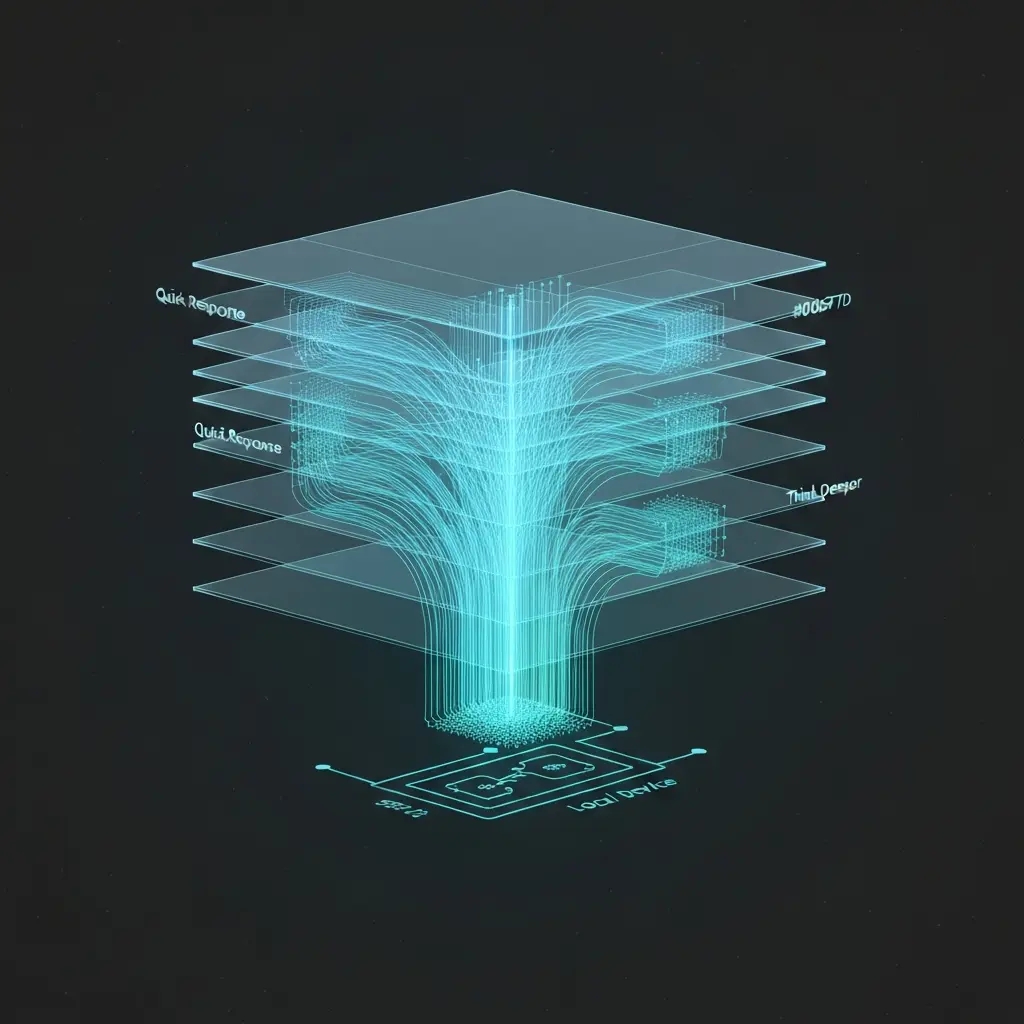
The critical technical advancement in both Wave 3 and Workspace Studio is the introduction of a planning and execution layer. Previously, a Copilot or Gemini interaction was a stateless request-response cycle. Now, the AI can decompose a high-level instruction like “prepare the Q3 board report” into a dynamic plan: gather sales data from Dynamics, synthesise project updates from recent Teams chats, generate charts in Excel, and draft narrative sections in Word. This is not a simple macro; it’s a reasoning-driven process that adapts to conditions and new data.
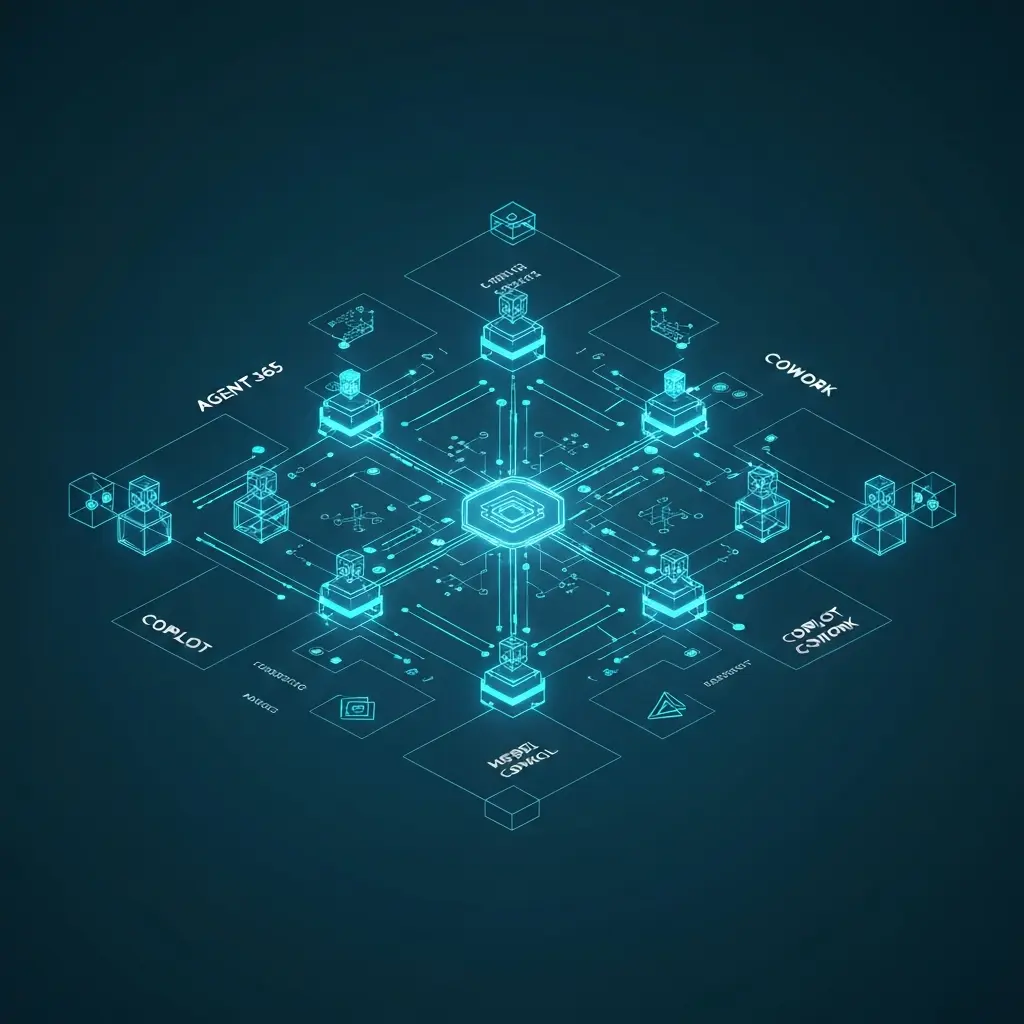
Microsoft’s Copilot Cowork and Google’s Workspace Studio both expose this capability, but through different lenses. Cowork integrates deeply within the Microsoft Graph, allowing agents to traverse applications natively. Workspace Studio provides a no-code interface for mapping natural language intent to automations across Gmail, Sheets, and Drive. The underlying mechanism involves the AI generating a structured representation of tasks—often as a directed acyclic graph (DAG)—which is then managed by an orchestration runtime.
Pro Tip: When designing for these platforms, structure your enterprise data and APIs with clear, idempotent endpoints. An agentic workflow will call them repeatedly as part of its planning and validation cycles. Ambiguous or stateful APIs can cause execution loops.
Multi-Model Reasoning and Strategic Grounding
The sheer complexity of enterprise workflows often exceeds the capabilities of a single large language model (LLM). Recognising this, both vendors have embraced a multi-model, strategic grounding approach. Microsoft’s Frontier program now integrates Anthropic’s Claude models specifically for “reasoning-heavy segments” of a workflow, such as legal compliance checks or complex financial modelling within a broader Copilot-driven process. This allows the system to route subtasks to the most capable specialised model.
Concurrently, grounding—the process of anchoring AI responses in trusted data—has become more granular and dynamic. Microsoft’s Work IQ and Context IQ updates let users scope AI grounding to specific sources, like a single Teams channel or a local Excel workbook, drastically reducing irrelevant data “noise.” More powerfully, Google’s Gemini Enterprise Data Federation (now in Public Preview) enables real-time grounding in external systems like Salesforce without any data ingestion. This resolves a major data governance and latency hurdle.
# Conceptual API call for Google's Data Federation grounding
# This avoids moving data into Google's systems.

response = gemini_enterprise.generate_content(
    prompt="What is the pipeline status for Acme Corp?",
    grounding_config={
        "source": "salesforce",
        "connection_id": "sfdc_prod_connector_01",
        "objects": ["Opportunity", "Account"],
        "filters": {"Account.Name": "Acme Corp"}
    }
)
As the official Gemini for Google Workspace documentation states, this federated approach “ensures data remains in its source system, governed by its native permissions and policies” (Google Cloud, 2026). This architecture is essential for regulated industries.
Governance and Autonomous Agent Layers
Unleashing autonomous workflows necessitates equally sophisticated governance. Microsoft Purview Data Loss Prevention (DLP) for Copilot has been extended with ‘Web Search Interception,’ a critical feature that prevents sensitive prompt data from leaking to external search indices during the grounding process. This closes a previously overlooked data exfiltration vector.
The most profound shift, however, is the emergence of fully autonomous service layers. Microsoft’s new ‘Service Agent’ in 365 Copilot operates as an intelligent routing and resolution layer over Dynamics 365. It can pull context from support tickets, customer emails in Outlook, and engineering documentation in SharePoint to resolve issues without requiring a human to manually switch tools or compile information. This moves AI from assisting employees to directly serving customers.
Why does this autonomous layer matter? It fundamentally changes the economics of service delivery. The 2026 Forrester TEI study projects a 200% ROI over three years for the Dynamics 365 + Copilot Agentic framework, citing the reduction in mean time to resolution (MTTR) and the diversion of tier-1 support tickets as key drivers. The architectural implication is that AI is no longer a peripheral tool but a core, integrated component of the business logic layer.
Pro Tip: Implementing autonomous agents like the Service Agent requires immaculate data hygiene and clear escalation protocols. Map out the full ‘happy path’ for a workflow, but also design explicit, human-readable checkpoints for scenarios where confidence scores are low or policies are triggered.
The 2026 Outlook
Looking ahead, the architecture of enterprise software will increasingly be shaped by agentic principles. We predict a move towards standardised, inter-vendor orchestration protocols, allowing a Microsoft Copilot agent to hand off a task to a Google Gemini agent if a specific Google Workspace action is required. Security and observability will become paramount; expect new tooling for visualising AI-generated execution graphs, auditing agent decisions, and simulating workflow outcomes. Furthermore, the line between coding and orchestration will blur, with platforms like Workspace Studio evolving to allow developers to inject custom code nodes into no-code automation pipelines, creating a new hybrid development model.
Key Takeaways
- Architect for Orchestration: Design your internal APIs and data schemas to be easily discoverable and callable by AI agents, prioritising idempotency and clear error states.
- Embrace Multi-Model Strategies: Recognise that no single LLM is optimal for all tasks. Plan for a routing layer that can leverage specialised models for reasoning, coding, or summarisation within a single workflow.
- Govern the New Data Plane: Agentic AI creates a new data access pattern. Extend your data governance to explicitly cover AI grounding contexts, prompt DLP, and cross-application access logs.
- Quantify Autonomous Value: Move beyond measuring time saved in chat. Develop KPIs around business outcomes directly enabled by agentic workflows, such as reduced process cycle time or customer issue resolution rate.
- Prioritise Observability: The ‘black box’ problem intensifies with multi-step AI. Invest in tools that can trace an agent’s plan, execution steps, and data sources for every outcome.
Conclusion
The shift from chat to agentic orchestration marks the end of AI’s prototyping phase and the beginning of its production era. The technical challenge is no longer about generating text, but about building reliable, secure, and observable systems where AI acts as an active participant in business processes. Success requires a fundamental rethink of integration patterns, governance models, and success metrics. At Zorinto, we help clients navigate this transition by architecting the middleware, governance layers, and observability frameworks that turn the promise of platforms like Wave 3 and Workspace Studio into robust, production-ready value.