
Go 1.26, Rails 8.1, Django Security: The 2026 Backend Pivot
February 2026's critical releases from Go, Rails, and Django demand a strategic pivot for scaling and securing backend architectures in the year ahead.
Feb 21, 2026
Web ArchitectureFebruary 2026's critical releases from Go, Rails, and Django demand a strategic pivot for scaling and securing backend architectures in the year ahead.

Shopify Winter '26 redefines commerce architecture with the Universal Commerce Protocol, 2,048 variants, and AI-orchestrated storefronts. This technical analysis is for engineering leads.

In 2026, Astro 6 and Next.js 16 are achieving production parity by eliminating dev-prod disparity with unified runtimes and enhanced performance features for reliable web applications.

A deep dive into the 2026 shift towards extensible web platforms, analysing Next.js 16 Build Adapters, Svelte's compiler exports, and Astro 6's deterministic runtimes for senior engineers.

How the 2026 shift to deterministic development servers and edge runtime fidelity in Astro 6, Next.js 16, and SvelteKit is eliminating environment mismatches.

The 2026 release of Astro 6 and Next.js 16 shifts web development from hydration-first to runtime-parity and explicit state architectures for superior performance.

Astro 6.0 and Next.js 16 have eliminated the 'works on my machine' problem by standardising runtime fidelity—ensuring local development is bit-for-bit identical to production deployments.
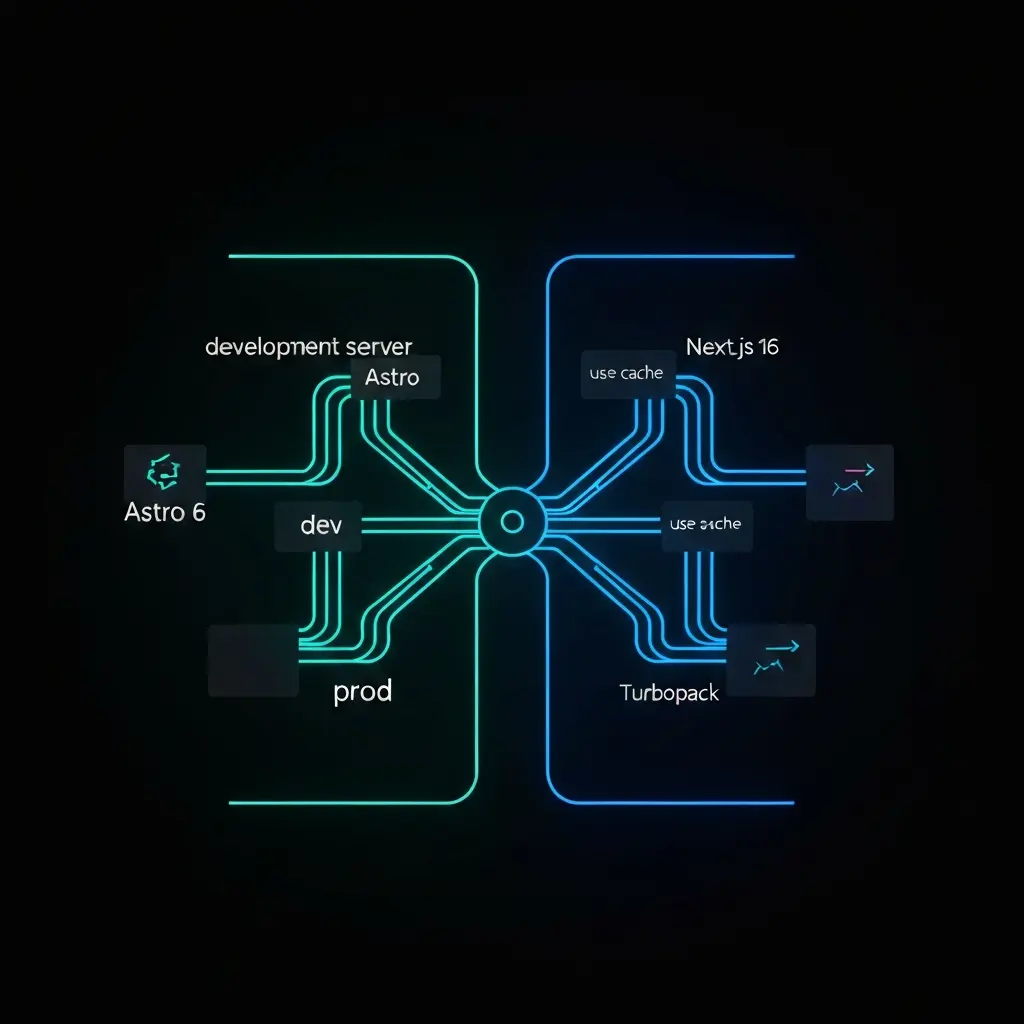
Astro 6 Beta and Next.js 16 Stable deliver a major shift towards explicit data governance and absolute runtime parity, fundamentally changing how frontend teams build and deploy.

The 2026 framework releases mark a shift from performance-only optimisation to secure-by-default architectures with real-time data orchestration through stable Content Layers.