· Web Architecture · 8 min read
Deterministic Web Architectures: The 2026 Frontend Pivot
February 2026 sees major frameworks like Astro, Next.js, and SvelteKit adopt deterministic architectures, giving developers explicit control over resources for consistent, high-performance web applications.
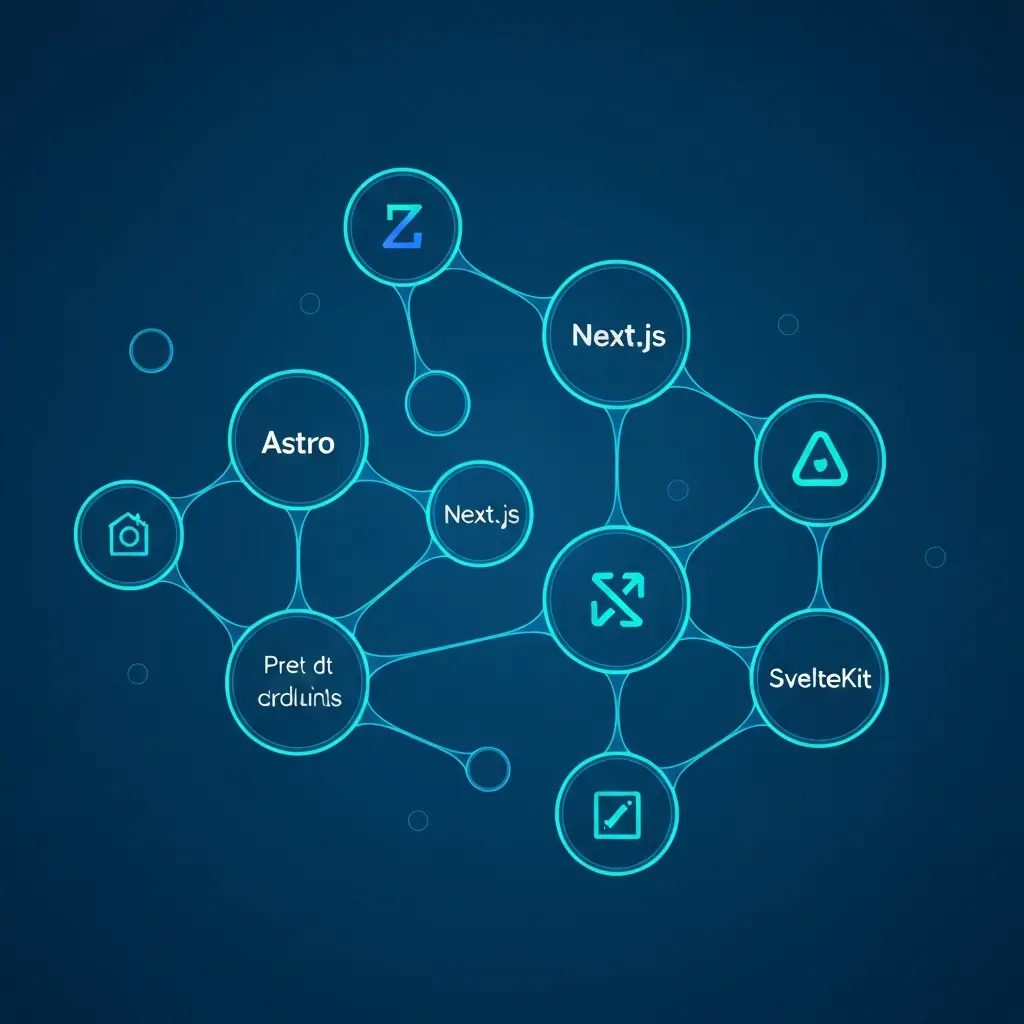
TL;DR: February 2026 marks a pivotal shift towards deterministic web architectures. Astro 6.2, Next.js 16.2, and SvelteKit eliminate ‘magic’ background processes in favour of explicit, granular control over caching, environments, and resources. This ensures development-to-production parity, reducing bugs and boosting performance for engineering teams.
Introduction
For years, frontend development has been plagued by the ‘it works on my machine’ syndrome, where subtle differences between local development servers and production runtimes lead to elusive bugs and performance disparities. The industry’s reliance on ‘magic’—opaque background processes that handle caching, bundling, and environment configuration—has often left developers debugging in the dark. February 2026 represents a watershed moment with the stabilisation of key features in Astro 6.0, Next.js 16.2, and SvelteKit, heralding the era of Deterministic Architectures. This paradigm shift moves away from implicit heuristics towards systems where engineers have precise, declarative control over every aspect of the application lifecycle, from data loading to layout rendering. It addresses long-standing challenges in scalability and reliability, particularly for complex, content-heavy sites and dynamic SaaS platforms. By prioritising transparency over automation, these frameworks empower teams to build more predictable and maintainable web experiences.
What is Deterministic Architecture?
Deterministic Architecture refers to a web development paradigm where the behaviour of an application is explicitly defined and controlled by the developer, rather than being inferred or managed by opaque framework ‘magic’. It ensures that the development environment, build process, and production runtime are functionally identical, providing predictable outcomes. This approach eliminates environmental variables that cause discrepancies, allowing for reliable debugging, consistent performance, and scalable deployments. In essence, it turns implicit framework assumptions into explicit developer intentions, fostering a more engineering-centric workflow.
Why Does Environment Parity Matter for Deterministic Architectures?
Environment parity is the cornerstone of deterministic design, ensuring that code behaves identically from local development to production deployment. Astro 6.2 achieves this through its integration with the Vite Environment API, which allows the development server (astro dev) to run on the exact same runtime as production, such as Cloudflare’s workerd. This eliminates edge cases where differences in JavaScript engines or module systems cause failures. Similarly, Next.js 16.2 has stabilised the use cache directive, moving from automatic caching heuristics to an explicit, opt-in model for components and functions. Developers now declare caching intentions directly, reducing unpredictable behaviour in data fetching and rendering.
// Example of explicit caching in Next.js 16.2
import { cache } from 'next/cache';

const getData = cache(async (id) => {
  // Expensive data fetch
  const res = await fetch(`https://api.example.com/data/${id}`);
  return res.json();
});
// Use in a component or route handler
export default async function Page({ params }) {
  const data = await getData(params.id);
  return <div>{data.name}</div>;
}
Pro Tip: When configuring Astro with the Vite Environment API, always specify the exact runtime target (e.g.,
workerd) in yourastro.config.mjsto ensure dev-server parity. Refer to the Astro documentation on environment configuration for best practices.
This shift not only mitigates ‘it works on my machine’ issues but also streamlines CI/CD pipelines, as builds become more reproducible. For technical architects, it means fewer production incidents and faster onboarding for new team members. The business value lies in reduced downtime and lower maintenance costs, as debugging becomes a deterministic process rather than a guessing game.
How Are Performance Optimisations Achieved Through Explicit Control?
Deterministic architectures enable fine-grained performance tuning by giving developers direct access to resource management. Next.js 16.2 introduces Layout Deduplication, an optimisation where shared layouts across routes are downloaded only once during prefetching, cutting network transfer by up to 50% for dense pages like dashboards. Astro’s Content Loader API in version 6.0+ includes a retainBody: false option, allowing raw markdown or JSON to be excluded from the build-time data store. This significantly reduces memory overhead for sites with over 10,000 content entries, improving build speeds and runtime efficiency.
---
// Astro Content Loader API example with retainBody
export async function getStaticPaths() {
  const posts = await fetch('https://api.example.com/posts').then((res) => res.json());
  return posts.map((post) => ({
    params: { slug: post.slug },
    props: { post, retainBody: false }, // Excludes raw content from store
  }));
}
---
Pro Tip: Use Astro’s
retainBody: falsefor large-scale content sites to minimise memory usage during builds, but ensure your frontmatter parsing is robust, as only metadata is retained.
Astro 6.2’s first-party Fonts API automates preloading and fallback generation, reducing Cumulative Layout Shift (CLS) by an average of 12%. These optimisations are deterministic because developers configure them explicitly, rather than relying on framework defaults that may not suit specific use cases. For CTOs, this translates to measurable improvements in Core Web Vitals, directly impacting user retention and SEO rankings. The ability to control these aspects precisely aligns with the growing demand for performant, user-centric web applications.
What Enhances Developer Experience in This New Paradigm?
Developer experience is revolutionised through tools that provide clarity and speed. Svelte 5.5’s Runes ($state, $derived, $effect) replace the reactive label ($:) syntax, offering a 25% reduction in JavaScript evaluation time on mobile devices by eliminating virtual DOM diffing in favour of direct signal updates. Next.js 16.2 makes Turbopack the default bundler, delivering 10x faster Hot Module Replacement (HMR) and achieving 99.8% feature parity with Webpack, officially deprecating the legacy tool for new projects. This speeds up iteration cycles, especially in large codebases.
// Svelte Runes example for deterministic state management
<script>
  import { $state, $derived } from 'svelte';

  let count = $state(0);
  const doubled = $derived(count * 2);

  $effect(() => {
    console.log(`Count is: ${count}`);
  });
</script>

<button on:click={() => count++}>
  Count: {count}, Doubled: {doubled}
</button>
Pro Tip: Leverage Turbopack’s incremental compilation in Next.js 16.2 for faster development builds, but audit plugin dependencies, as some Webpack-specific configurations may require migration.
Next.js DevTools now natively support the Model Context Protocol (MCP), enabling AI coding agents to interpret real-time routing and caching states for faster debugging. These enhancements reduce cognitive load, allowing senior engineers to focus on architecture rather than tooling quirks. The business benefit is accelerated feature development and reduced time-to-market, as teams spend less time wrestling with unpredictable framework behaviour. This aligns with the broader trend towards deterministic systems that prioritise developer agency and productivity.
How Do Standardised APIs Improve Type Safety and Reliability?
Standardisation is key to deterministic architectures, ensuring consistent behaviour across components and actions. SvelteKit 2.50.0 replaces experimental features like buttonProps with a unified .as() method for Remote Functions in form actions. This improves type safety by providing a single interface for multi-submit button handling, reducing runtime errors and enhancing code maintainability. Developers can now define form actions with explicit types, making intentions clear and verifiable at compile time.
// SvelteKit Remote Functions with .as() method
export const actions = {
  default: async ({ request }) => {
    const data = await request.formData();
    const intent = data.get('_intent');

    if (intent === 'save') {
      // Handle save logic
    } else if (intent === 'delete') {
      // Handle delete logic
    }
  }
};

// In a component
<form method="POST">
  <button name="_intent" value="save" .as("submit")>Save</button>
  <button name="_intent" value="delete" .as("submit")>Delete</button>
</form>
Pro Tip: Use SvelteKit’s
.as()method to centralise form action logic, improving testability and reducing boilerplate. Check the SvelteKit documentation on form actions for advanced patterns.
This move towards explicit API design reduces ‘magic’ string-based configurations, which are prone to typos and misalignment. For technical architects, it means more robust systems with fewer integration issues, as type safety catches errors early in the development cycle. The reliability gained from such standardisation supports scalable team collaboration and long-term project sustainability, core tenets of deterministic web development.
The 2026 Outlook
Looking ahead, 2026 will see the consolidation of deterministic principles across the web development ecosystem. We predict increased adoption of explicit resource management in other frameworks, with a focus on standardising environment APIs and caching strategies. Edge computing will become more integrated, as seen with Astro’s runtime parity, leading to hybrid deployments that leverage deterministic controls for optimal performance. AI-assisted development, via tools like MCP in Next.js, will mature, providing real-time insights into architectural decisions. Additionally, expect a rise in benchmarking standards that measure deterministic outcomes, such as consistent Time to First Byte (TTFB) and Interaction to Next Paint (INP), driving further innovation. Organisations that embrace these trends will gain a competitive edge through more reliable and maintainable web platforms.
Key Takeaways
- Adopt explicit caching directives in Next.js 16.2, using the
use cacheAPI to eliminate unpredictable behaviour in data fetching and component rendering. - Configure Astro 6.2 with the Vite Environment API to ensure development servers mirror production runtimes, reducing environment-specific bugs.
- Implement Svelte Runes for state management to achieve performance gains through direct signal updates, especially on mobile devices.
- Leverage layout deduplication in Next.js for high-density pages to cut network transfer and improve load times.
- Standardise form actions with SvelteKit’s Remote Functions and the
.as()method to enhance type safety and reduce runtime errors.
Conclusion
The shift to deterministic web architectures in 2026 marks a fundamental evolution from opaque ‘magic’ to transparent, engineer-controlled systems. By prioritising explicit configurations in Astro 6.2, Next.js 16.2, and SvelteKit, developers gain the precision needed for scalable, high-performance applications. This paradigm reduces debugging overhead, boosts Core Web Vitals, and aligns with modern DevOps practices. At Zorinto, we help clients navigate these architectural pivots, implementing deterministic foundations to build robust, future-proof web solutions that deliver consistent user experiences.