· Web Architecture · 7 min read
GPT-5.1 and Agentic AI Reshape 2026 Microsoft 365 and Google Workspace
The February 2026 roadmap pivots from chat assistants to autonomous agentic systems, with GPT-5.1 enabling declarative workflows and 1-million-token context for complex reasoning.
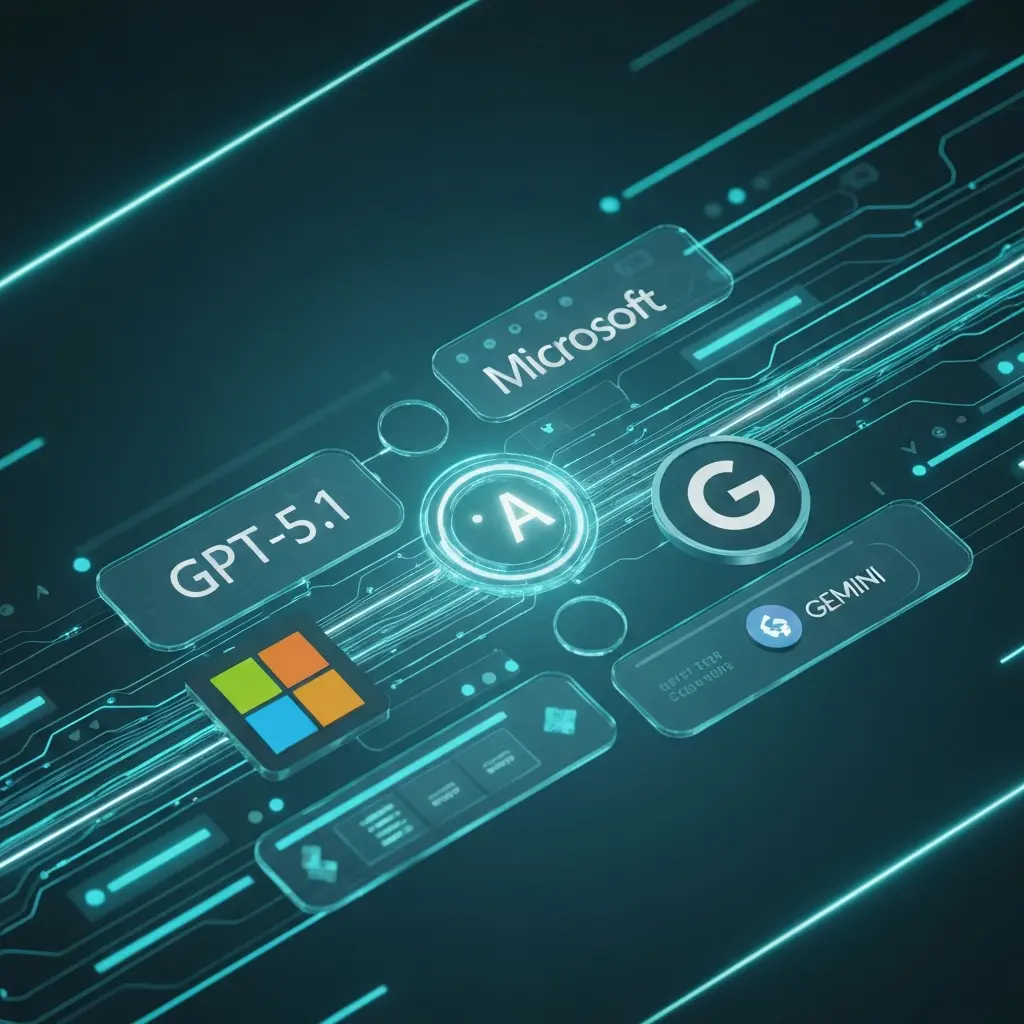
TL;DR: The 2026 enterprise AI landscape has decisively shifted from reactive chat assistants to proactive, autonomous agentic systems. Driven by Microsoft’s GPT-5.1 for declarative agents and Google’s 1-million-token Gemini 3 Pro, these platforms now perform complex, multi-step reasoning within workflows. This architectural pivot enables guided editing, automated cross-app orchestration, and granular governance, fundamentally redefining user interaction with productivity suites.
Introduction
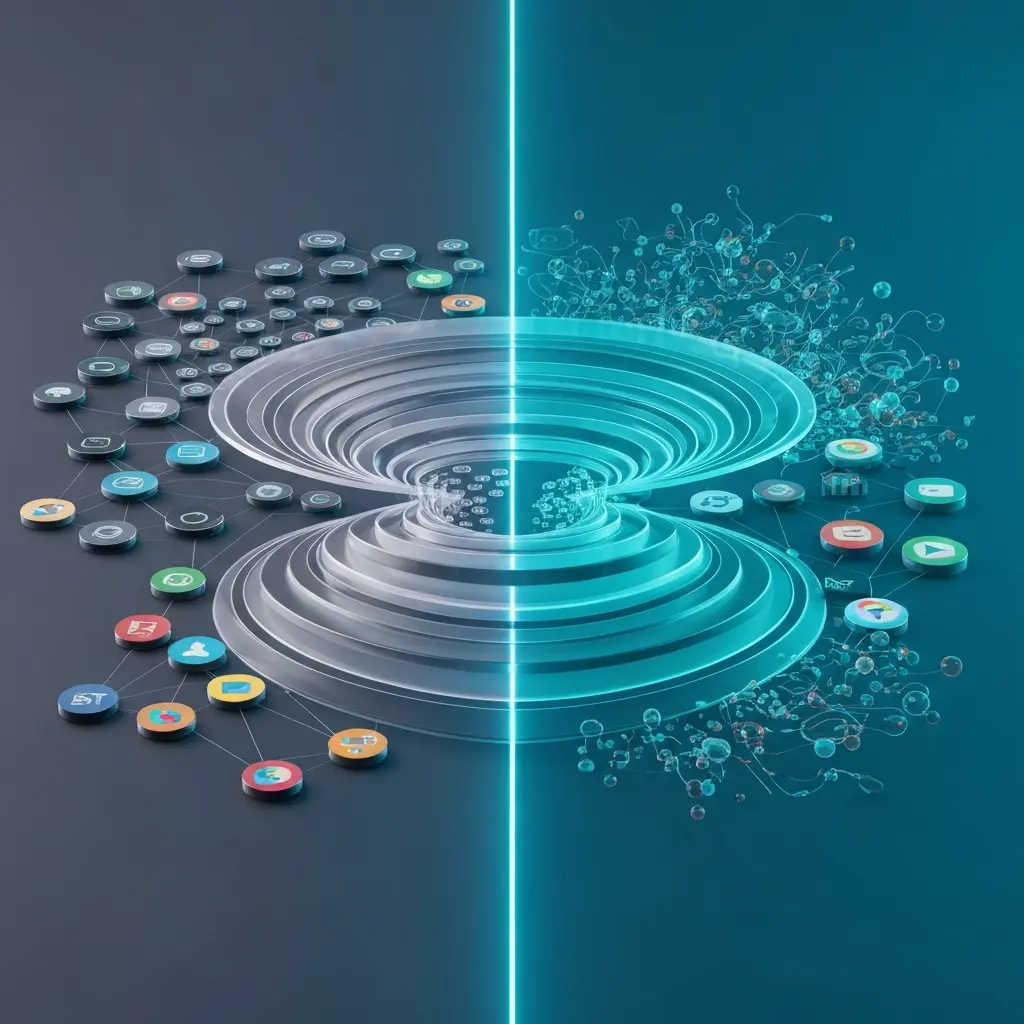
Enterprise productivity architecture has historically suffered from a fundamental disconnect: intelligent assistants were siloed from core workflow logic. The legacy model of a passive chat pane, requiring constant user prompting and manual context-switching, created cognitive overhead rather than reducing it. The February 2026 roadmap updates from Microsoft and Google represent a decisive architectural break from this paradigm, pivoting from auxiliary ‘chat assistants’ to integrated ‘agentic systems.’ At the heart of this shift is GPT-5.1, Microsoft’s new ‘auto’ architecture that dynamically selects reasoning models, and Google’s commitment to massive context via Gemini 3 Pro. This evolution marks the transition from AI as a tool to AI as an operational layer, capable of understanding intent, orchestrating processes, and executing tasks with a transparent audit trail.
What is the Agentic AI Shift with GPT-5.1?
The 2026 agentic AI shift, powered by architectures like GPT-5.1, is the integration of autonomous, goal-oriented reasoning engines directly into enterprise workflow applications. Unlike previous chat-based models that react to explicit user commands, these declarative agents interpret high-level intent, decompose complex objectives into sub-tasks, and execute them across multiple data sources and applications. Crucially, they operate with a persistent memory of context—up to 1 million tokens in Google’s case—and can provide a verifiable chain of reasoning for their actions. This transforms AI from a conversational interface into an active, intelligent participant in business processes.
The Architectural Engine: GPT-5.1’s Adaptive Model and Gemini’s Massive Context
Underpinning Microsoft’s advance is the GPT-5.1 ‘auto’ architecture, which represents a significant optimisation in model orchestration. This system dynamically routes user prompts, selecting between a high-speed, cost-efficient chat model for simple queries and a deep reasoning model for complex, multi-step problems—all without user intervention. This declarative approach means developers can define an agent’s goal, and the architecture handles the optimal execution path. Concurrently, Google has solidified its advantage in context scale. Gemini 3 Pro’s stable 1-million-token window allows an agent to be grounded in entire corpuses of data, such as 1,500 pages of API documentation or 30,000 lines of a codebase, enabling it to reason with unprecedented depth and accuracy on specialised topics.
Pro Tip: When designing for GPT-5.1’s declarative model, structure agent prompts as clear objectives with defined success criteria (e.g., “Analyse this Q3 sales dataset and identify the top three underperforming regions”), rather than a series of step-by-step instructions. The system is optimised to decompose the goal itself.
For architects, the implication is a move towards designing systems that expose intent, not just commands. As noted in the Microsoft 365 Developer Blog, the new agent framework prioritises “goal-oriented interaction patterns.”
Agentic Workflows in Practice: From Guided Editing to Personal COO
The theoretical shift manifests in concrete features. Microsoft’s new ‘Agent Mode’ in Word, Excel, and PowerPoint exemplifies autonomous guided editing. Here, the AI doesn’t just suggest edits; it reasons through the entire change set in real-time. If asked to “make this deck more client-friendly,” it can analyse the content, adjust tone, reformat complex slides for clarity, and provide a side-pane audit trail explaining each decision. This transparency is critical for trust and compliance in regulated industries.
Google’s counterpoint is the ‘Personal Intelligence’ beta, a proactive agent that scans Gmail, Calendar, Photos, and YouTube to identify task conflicts, suggest agenda items, and even automate ‘Personal COO’ functions like drafting summary emails from a thread. This moves AI from a pull-to a push-model, anticipating needs based on a holistic, cross-app view of the user’s digital footprint—a capability enabled by that vast context window.
Why Does Enterprise AI Governance Now Define the Architecture?
The autonomy of these new systems creates a parallel imperative for robust governance. Unchecked, an agent with permissions to edit documents and communicate across teams could inadvertently create a data security ‘blast radius.’ Microsoft’s direct response is new automated oversharing remediation features within Purview, designed specifically to detect and roll back excessive permissions granted by AI-driven actions. Furthermore, removing the 50-license minimum for Copilot Chat Insights democratises visibility, allowing any organisation to monitor AI adoption patterns and potential misuse at a group level.
This signifies that governance is no longer a peripheral compliance checkbox but a core, non-negotiable component of the agentic architecture itself. Security controls must be as dynamic and contextual as the AI they are overseeing. Designing an agent without embedded governance logic—what it can access, how it logs decisions, who is accountable—is architecturally incomplete in 2026.
The Development Paradigm: Building for the Agentic Layer
For technical teams, the platform itself is evolving into a development environment. Google Workspace Studio’s promotion to a core service provides a native environment for building agents that comply with protocols like the Universal Commerce Protocol (UCP). Similarly, Microsoft’s native embedding of Copilot Chat into Power Apps model-driven apps allows developers to create agents that reason directly over Dataverse records and trigger cross-app workflows.
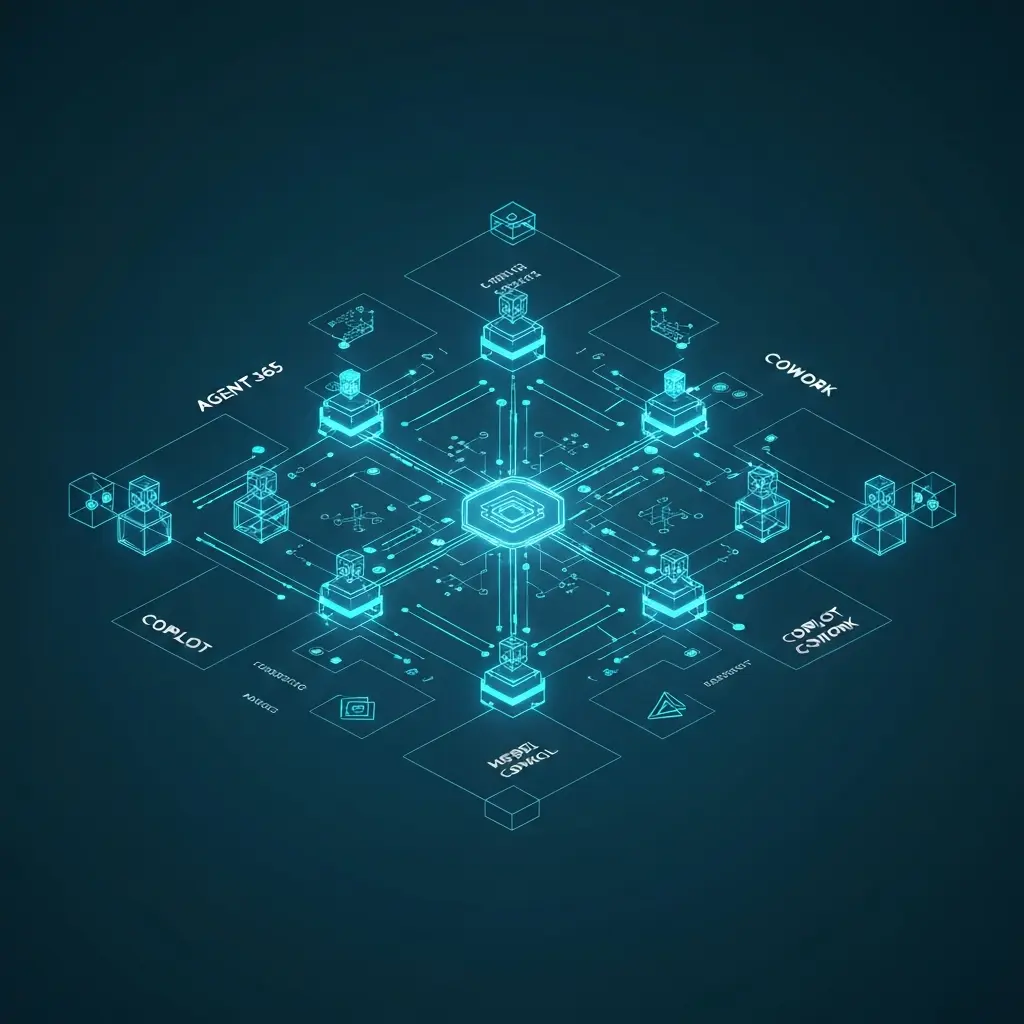
The new abstraction is the orchestration layer. Microsoft’s ‘Work IQ’ exemplifies this, acting as an intelligence engine that maps common operational patterns (e.g., “after filing a sales report in SharePoint, update the CRM and notify the manager”) and automates these multi-app handoffs. The developer’s role shifts from building discrete automations to training and configuring these higher-order orchestration systems.
// Example pseudocode for a declarative agent goal in a modern framework
const marketingReportAgent = {
  goal: 'Generate a performance summary for the Q4 campaign.',
  constraints: [
    "Use data from the 'Campaign_Data' SharePoint list and the 'Spend' Excel file in OneDrive.",
    'Adhere to the brand guidelines document in the Marketing team site.',
    'Output must be a 5-slide PowerPoint deck with an executive summary.',
  ],
  successCriteria: [
    'Deck includes YTD ROI analysis.',
    'All data visualisations are accessible (WCAG 2.1 AA).',
    'A full audit trail of data sources is appended as the final slide.',
  ],
};
// The GPT-5.1-backed system handles the planning, retrieval, analysis, and creation.
The 2026 Outlook: Predictions for the Agentic Architecture
Looking ahead, the 2026 trajectory is clear: the agentic layer will become the primary interface for complex enterprise software. We predict a move towards standardised ‘Agent Communication Protocols’ (like UCP) to enable interoperability between different AI systems from Microsoft, Google, and other vendors. Architectures will increasingly feature ‘confidence scoring,’ where agents flag low-certainty actions for human review, creating a continuous feedback loop for model improvement. Furthermore, the line between consumer and enterprise AI will blur, with ‘Personal Intelligence’ models becoming the training ground for more robust business agents, demanding even more sophisticated data segregation and privacy-enhancing technologies within the platform architecture.
Key Takeaways
- The core architectural shift is from chat-based reaction to declarative, goal-oriented agency, with GPT-5.1 leading Microsoft’s adaptive model strategy.
- Scale of context is a primary differentiator; Google’s 1-million-token Gemini 3 Pro enables deep, document-grounded reasoning that changes RAG (Retrieval-Augmented Generation) implementation patterns.
- AI governance must be proactive and automated, embedded directly into the agentic workflow to manage permissions and audit trails, not applied as an afterthought.
- Development is transitioning to configuring orchestration layers (like ‘Work IQ’) and defining agent goals within low-code studios, rather than scripting individual automations.
- The user experience is being redefined by proactive, cross-application intelligence that anticipates needs, fundamentally altering productivity suite interaction models.
Conclusion
The February 2026 updates are not merely feature additions; they are the blueprint for a new architectural era in enterprise productivity. The integration of GPT-5.1 and agentic workflows into Microsoft 365 and Google Workspace signifies the end of AI as a separate application and the beginning of AI as the intelligent connective tissue of all digital work. Success in this new paradigm will depend on an organisation’s ability to strategically adopt these agentic capabilities, design processes around intent, and implement the granular governance they require. At Zorinto, we guide clients through this precise architectural transition, ensuring their AI strategy is built on a foundation of robust, secure, and effectively orchestrated intelligence.