· Web Architecture · 7 min read
Microsoft 365 E7 vs Google Gemini: The 2026 Agent Architecture War
March 2026's new Microsoft 365 E7 and Google Gemini releases represent a fundamental shift from passive AI assistants to orchestrators of autonomous, multi-model workflows.

TL;DR: March 2026’s major updates from Microsoft and Google pivot from conversational AI to autonomous agentic systems. Microsoft 365 E7’s Copilot Cowork orchestrates multi-model workflows, while Google Gemini Workspace deploys aggressive data connectivity. This signals a fundamental architectural shift towards task-executing agents that can reason and act across applications and external data sources semi-autonomously.
For years, the enterprise AI battleground was defined by the conversational interface. Assistants like Copilot and Gemini operated as sophisticated chatbots, responding to prompts within a single application’s context. The second week of March 2026 marked a decisive architectural escalation. Both Microsoft, with its new Microsoft 365 E7 Frontier Suite, and Google, overhauling Gemini for Workspace, moved beyond chat. They are now deploying systems designed not just to answer, but to act—orchestrating multi-step workflows, reasoning across models, and autonomously interacting with enterprise data silos. This evolution from assistant to agent represents the most significant shift in productivity software architecture since the move to the cloud, demanding a fundamental reassessment of integration, security, and value.
What is the Microsoft 365 E7 Frontier Suite?
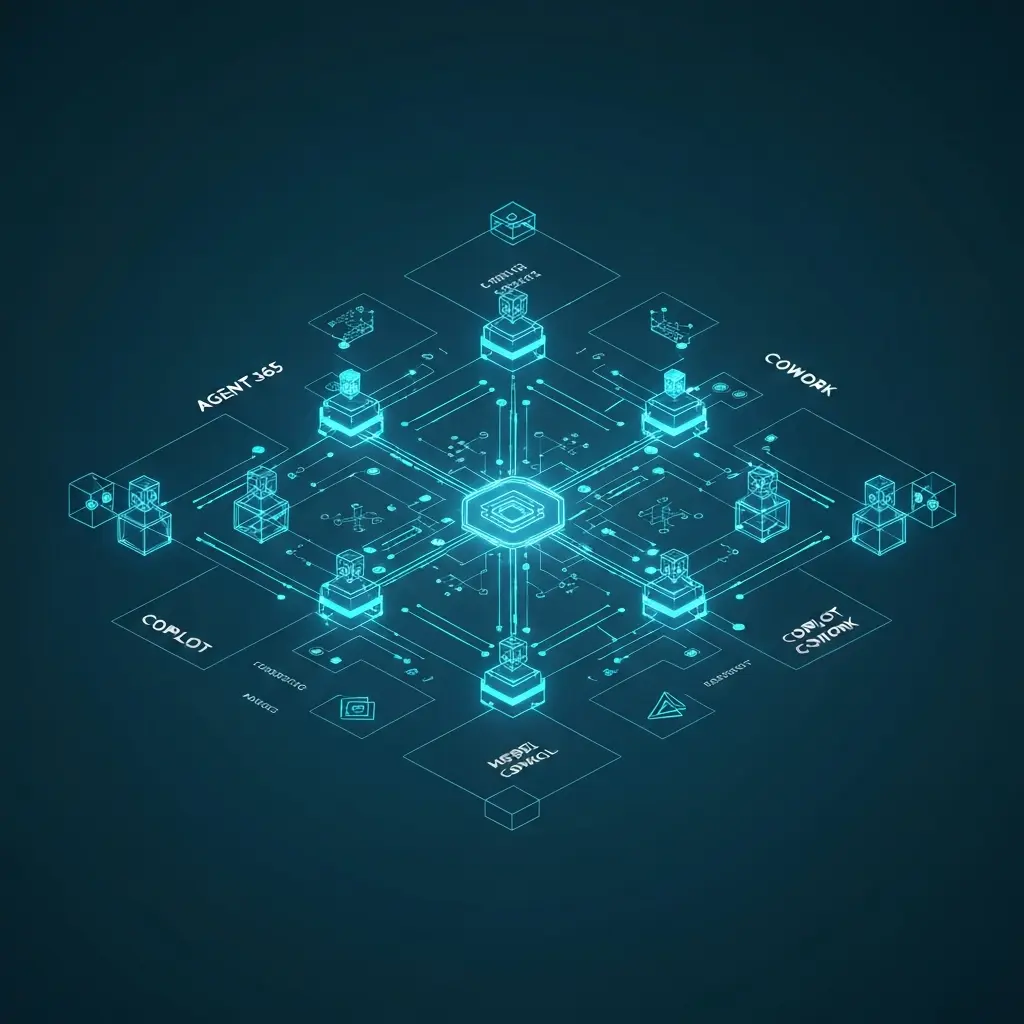
The Microsoft 365 E7 Frontier Suite, announced on 9 March 2026, is a new enterprise licensing tier that fundamentally redefines the productivity suite as an agentic operating environment. It bundles the existing E5 suite with the new ‘Agent 365’ framework and Copilot, creating a unified platform where autonomous AI agents can execute complex, multi-application workflows on behalf of users. Unlike previous iterations, Microsoft 365 E7 is architected for action over conversation, enabling Copilot to move beyond providing suggestions to semi-autonomously completing tasks across Teams, Outlook, Excel, and connected data sources.
How Has Agent Architecture Fundamentally Changed?
The core architectural shift is the move from a request-response model to a goal-oriented, multi-agent system. Previously, a user’s prompt triggered a single model to generate a text or code completion. The 2026 agentic frameworks, particularly Microsoft’s Copilot Cowork, decompose a high-level user instruction into a sequence of discrete sub-tasks. Each sub-task is then executed, potentially by different specialised AI models or APIs, with the system maintaining context and state throughout. This orchestration layer is the critical new component.
For instance, the instruction “Prepare the Q2 review deck with the latest sales figures” is no longer a search query. The agent might first invoke a data-fetching routine to pull numbers from Excel, use a reasoning model to structure the narrative, call the PowerPoint API to generate slides, and finally draft a distribution email in Outlook. This requires a persistent execution environment, secure credential management, and a state machine—capabilities now baked into the Microsoft 365 E7 foundation.
Pro Tip: When evaluating these platforms, map potential agent workflows against your existing internal APIs. The true cost isn’t just licensing; it’s the engineering effort to expose safe, well-documented endpoints for these autonomous systems to consume.
Why Does Multi-Model Orchestration Matter for Accuracy?
A key revelation in Microsoft’s March 2026 announcement was the official confirmation that Copilot Cowork utilises Anthropic’s Claude for specific complex reasoning tasks. This marks the first time Microsoft 365 has publicly routed enterprise data to a non-OpenAI model for core functionality. This multi-model orchestration is a strategic architectural decision to move beyond the limitations of any single foundational model.
The system now intelligently routes subtasks to the most suitable model based on the required capability: GPT-4 for creative ideation, Claude for nuanced logical reasoning, or a specialised internal model for proprietary data formatting. From a technical perspective, this introduces a sophisticated routing and evaluation layer. The agent must assess the sub-task, select a model, handle the respective API call formats, and normalise the outputs back into the workflow.
Consider a security-focused application like the new Agentic Secret Finder (ASF). Detecting valid credentials in an unstructured screenshot requires optical character recognition (OCR), pattern matching, and context-aware validation—a perfect case for a multi-agent, multi-model approach. One agent handles image analysis, another parses text, and a third reasons about whether a string resembles a real API key or a placeholder.
// Conceptual pseudocode for a multi-model orchestration engine
async function executeAgenticWorkflow(userGoal, context) {
  const plan = await reasoningModel.decomposeGoal(userGoal); // e.g., Uses Claude

  for (const task of plan.tasks) {
    const modelRouter = determineBestModel(task.type);
    const result = await modelRouter.execute(task, context);

    context.update(result); // Maintain workflow state
    logToTransparencyLedger(task, modelRouter, result); // For Agent Mode logs
  }

  return await synthesisModel.compileFinalOutput(context); // e.g., Uses GPT-4
}
How Are Data Connectors Redefining Application Boundaries?
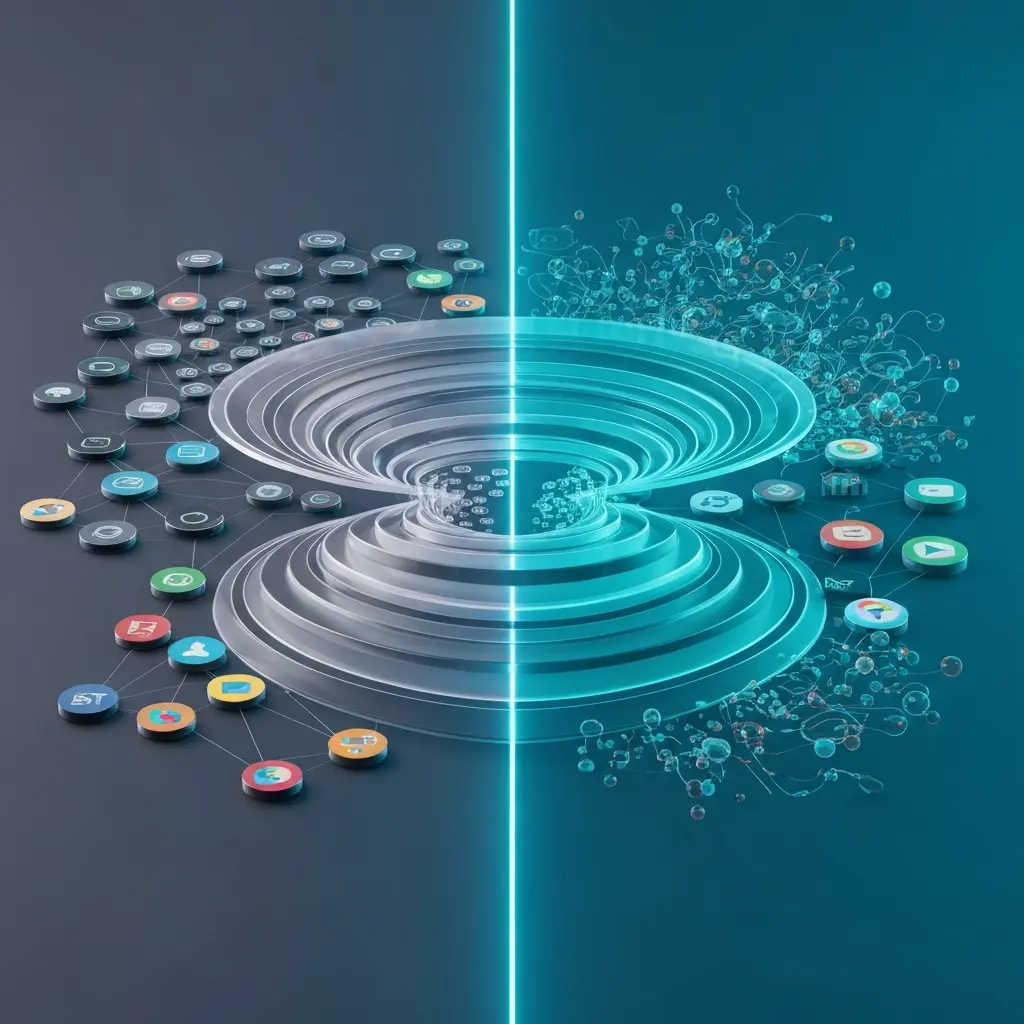
If Microsoft’s play is deep orchestration within its suite, Google’s March 2026 counter is aggressive horizontal integration. The new Gemini Enterprise Data Connectors allow Workspace to natively ground AI prompts in external platforms like Microsoft SharePoint, GitHub, Notion, and Shopify—without third-party middleware. This turns Google’s suite into a central nervous system for disparate enterprise data, a starkly different architectural philosophy.
Technically, this represents a massive investment in secure, permission-aware connectors and retrieval-augmented generation (RAG) at scale. Features like ‘Fill with Gemini’ in Sheets, which populates columns with real-time web data, or AI-generated Drive Overviews that cite sources, are surface-level manifestations of this deep connectivity. The ‘Match Writing Style’ feature in Docs is a sophisticated RAG implementation, creating a dynamic vector index of a user’s past communications to fine-tune output tone.
This creates a fascinating tension. Microsoft’s Microsoft 365 E7 offers a deeply integrated, vertically optimised agent experience within its ecosystem. Google offers a more federated, connector-centric model that acknowledges the heterogeneous reality of modern enterprise tech stacks. The latter approach may explain the cited adoption gap: 82% of Google users reporting AI value versus 66% for Microsoft, as Google’s AI feels immediately useful across more data sources.
The 2026 Outlook: Towards Specialised Agent Ecosystems
Looking ahead, the architecture will fragment further. We predict the emergence of specialised, third-party agents that plug into these platforms via standardised APIs, much like mobile apps do for an operating system. Microsoft’s ‘Agent 365’ framework and Google’s connector ecosystem will become platforms themselves. Security will be paramount, leading to new paradigms for agent authentication, action sandboxing, and immutable ‘Reasoning Logs’ like those seen in the new Agent Mode for Word and Excel.
The real competition will shift from model capability to orchestration reliability and the richness of the action graph—the catalogue of APIs and data sources an agent can reliably and safely manipulate. Enterprises will need to develop ‘agent readiness’ strategies, focusing on API governance, data productisation, and clear boundaries for autonomous action.
Key Takeaways
- The core shift is architectural: from conversational AI to goal-based, multi-step agentic systems that can execute workflows.
- Multi-model orchestration is now a competitive necessity, using different AI models as specialised tools within a single agentic workflow.
- Data connectivity strategy defines the platforms: deep vertical integration (Microsoft 365 E7) vs. broad horizontal federation (Google Gemini).
- Transparency features like reasoning logs are critical for debugging, governance, and user trust in autonomous systems.
- The total cost of adoption includes preparing your data and API landscape for consumption by these autonomous agents, not just the per-seat licence fee.
Conclusion
The March 2026 releases are not mere feature updates; they are the debut of a new architectural layer for enterprise software. The transition from AI that answers to AI that acts demands a reevaluation of integration patterns, security postures, and productivity metrics. The victor in this agent war will be determined not by whose chatbot is cleverer, but by whose platform provides the most reliable, transparent, and securely extensible foundation for autonomous work. At Zorinto, our architectural reviews help clients navigate this precise transition, ensuring their infrastructure is optimised not just for today’s tools, but for the autonomous agents that will define tomorrow’s workflows.