· Web Architecture · 8 min read
Production Parity in 2026: Astro 6 and Next.js 16 Convergence
In 2026, Astro 6 and Next.js 16 are achieving production parity by eliminating dev-prod disparity with unified runtimes and enhanced performance features for reliable web applications.

📚 Part of our 2026 Astro 6 & Next.js 16 series. For the main head-to-head comparison, see our pillar article: Next.js 16.2 vs Astro 6.1 — The 2026 Framework Speed & Precision Race.
TL;DR: In 2026, Astro 6 and Next.js 16 are eliminating dev-prod disparity through production parity. Unified runtimes like Cloudflare’s workerd ensure local code executes identically in production, while features like Turbopack caching and type-safe environment schemas enhance performance and reliability for senior engineers.
Introduction
For years, frontend development has been plagued by a persistent architectural flaw: the disparity between local development and production environments. Engineers would write code against mocks and stubs, only to encounter baffling failures in production due to missing platform globals or differing runtime behaviours. This divergence not only eroded confidence but also increased debugging overhead and deployment risks. However, 2026 marks a pivotal shift with the rise of Production Parity, driven by Astro 6 and Next.js 16. Following Cloudflare’s acquisition of Astro and subsequent framework updates, the industry is converging on executing local code in production-identical runtimes, such as Cloudflare’s workerd. This move ensures that features like Durable Objects or R2 storage are available without simulation, fundamentally aligning development with live deployment. The result is a more predictable, efficient workflow where bugs are caught earlier, and performance optimisations are validated from the start.
What is Production Parity?
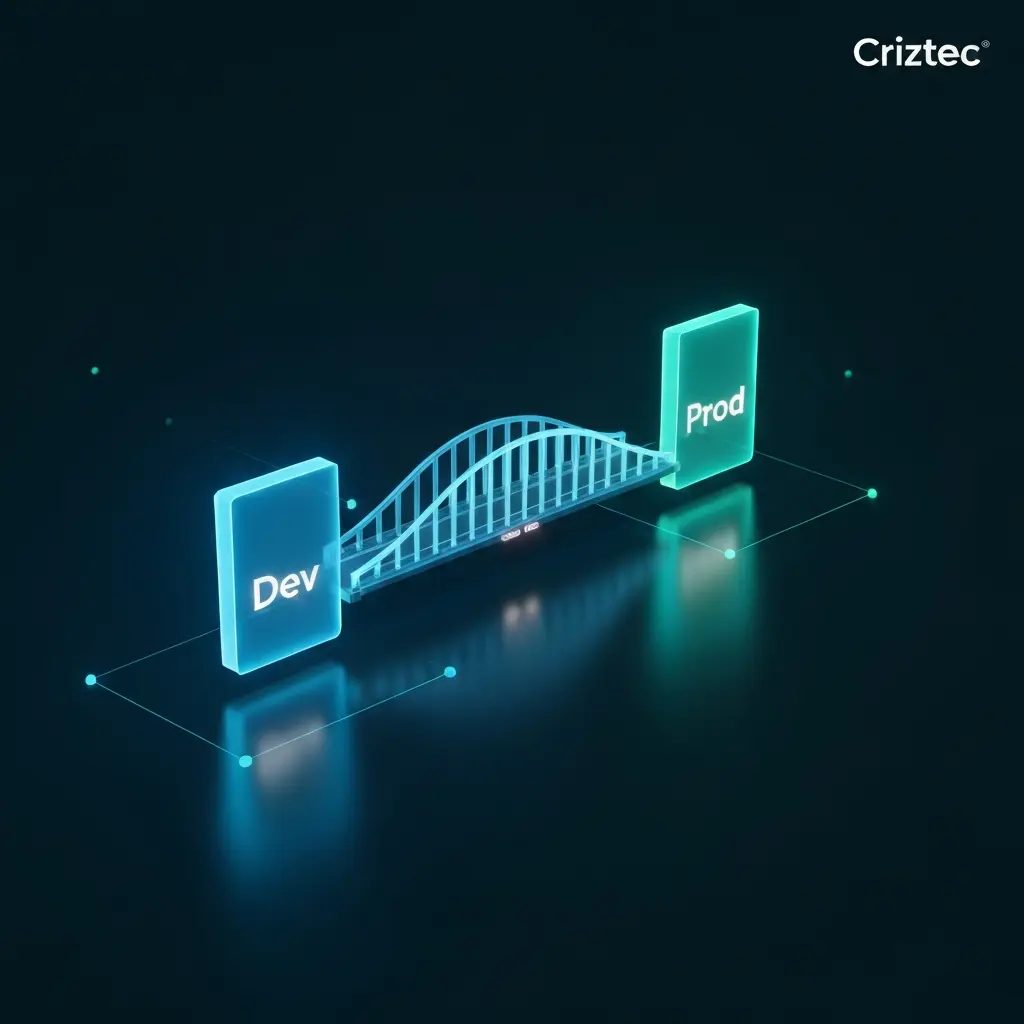
Production Parity refers to the architectural principle where development and production environments utilise identical runtimes, ensuring that code behaviour is consistent across all stages of the software lifecycle. In practice, this means local development servers now leverage the same underlying technology as production deployments, such as Cloudflare’s workerd for Astro or Node.js-compatible runtimes for Next.js. This convergence eliminates the need for environment-specific mocks, reduces “it works on my machine” issues, and guarantees that platform-specific APIs are fully available during development. By 2026, frameworks like Astro 6 have embedded this concept core to their design, making it a standard for modern web applications seeking reliability and performance.
Why Does Production Parity Matter for Modern Web Apps?
The drive for Production Parity stems from the increasing complexity of web applications, particularly with serverless functions, edge computing, and real-time data fetching. Traditional development setups often abstract away production realities, leading to subtle bugs that only surface under load or with specific cloud services. Astro 6’s Unified Dev Server exemplifies this shift by using Vite’s Environment API to run local development inside the actual workerd runtime. This allows engineers to test Cloudflare-specific features like Durable Objects or R2 buckets directly, without relying on fragile mocks.
From a business perspective, this reduces time-to-market by minimising deployment surprises and enhancing developer productivity. Teams can iterate faster with confidence that their local tests accurately reflect production behaviour. Moreover, this alignment supports better collaboration between development and operations, as both sides share a common understanding of the runtime environment. Early adoption in 2026 has shown that organisations leveraging these frameworks report fewer production incidents and improved system stability.
Pro Tip: When migrating to Astro 6, start by integrating its Unified Dev Server in a staging environment to validate runtime behaviour before full production deployment. This reduces risk and allows teams to familiarise themselves with the new workflow.
Performance Optimisations in the Era of Convergence
As runtimes converge, performance optimisations have become more critical, with Next.js 16 leading the charge through enhanced caching mechanisms and build tooling. The February 2026 canary release introduced Invocation ID scoping for LRU caches, which prevents memory leaks in high-concurrency scenarios, especially in ‘minimal mode’ environments. This ensures that cache isolation is maintained per request, improving scalability for enterprise applications. Concurrently, Turbopack’s persistent file system caching has been stabilised, resulting in a 94% faster cold-start for large monorepos, as documented in the Next.js 16 release notes.
Astro’s Zero-JS architecture continues to yield significant Core Web Vitals benefits, with early 2026 data indicating 60% ‘Good’ scores on Interaction to Next Paint (INP), compared to 42% for hydration-based frameworks. This performance edge is amplified by Production Parity, as developers can accurately measure and optimise metrics during development. For instance, SvelteKit 2.51.0’s new ‘scroll’ property in NavigationTarget allows for frame-perfect transition animations by providing precise pixel coordinates in navigation callbacks, enhancing user experience without compromising runtime consistency.
// Example of Next.js 16.2 caching with Invocation ID scoping
import { unstable_cache } from 'next/cache';

const fetchUserData = unstable_cache(
  async (userId) => {
    const response = await fetch(`https://api.example.com/users/${userId}`);
    return response.json();
  },
  ['user-data'],
  { revalidate: 1800 }
);
Enhancing Developer Safety and Experience
Safety and developer experience are paramount in the convergence movement, with frameworks introducing robust safeguards against common pitfalls. Astro 6’s new ‘astro:env’ module replaces error-prone ‘process.env’ usage with Zod-validated schemas, forcing build-time or runtime failures if required environment variables are missing. This type-safe approach eliminates configuration drift and ensures that secrets and public keys are properly managed. Similarly, native Content Security Policy (CSP) implementation has stabilised in Astro 6 with the ‘csp: true’ configuration, automatically generating and injecting hashes for inline scripts—a feature mirrored in SvelteKit 2.51.0 for hydratable scripts.
The React Compiler has become the default in Next.js 16, automating memoisation for 90% of production codebases and reducing the need for manual ‘useMemo’ or ‘useCallback’ optimisations. This not only boosts performance but also simplifies code maintenance, allowing engineers to focus on business logic rather than micro-optimisations. These enhancements collectively reduce cognitive load and mitigate risks associated with misconfigured deployments, aligning with the broader goal of Production Parity.
Pro Tip: Leverage Astro 6’s type-safe environment schemas from the outset to catch missing variables early. Define your schema in the configuration file to enforce validation across development and production.
// astro.config.mjs example for type-safe environments
import { defineConfig } from 'astro/config';
import env from 'astro:env';

export default defineConfig({
  env: env.schema({
    PUBLIC_API_KEY: env.string(),
    SECRET_DB_URL: env.secret(),
    NODE_ENV: env.enum(['development', 'production']),
  }),
});
Architectural Flexibility and Future-Proofing
Flexibility remains a key theme, with frameworks exposing lower-level APIs to customise build outputs and data fetching. Next.js 16’s alpha Build Adapters API allows developers to tailor the final build pipeline, responding directly to Astro’s adaptable adapter model. This enables organisations to integrate with diverse deployment targets, from edge networks to traditional servers, without framework lock-in. Meanwhile, Astro 6 has moved its Content Layer to ‘Live’ mode, enabling type-safe runtime fetching from external APIs or databases while maintaining the developer experience of local Markdown collections.
These advancements empower technical architects to design systems that are both performant and adaptable to future technological shifts. For example, stable live content collections facilitate dynamic content updates without full rebuilds, reducing latency for content-heavy sites. By embracing these extensible architectures, teams can ensure their applications remain scalable and maintainable as requirements evolve, all within the context of Production Parity.
The 2026 Outlook: Towards Seamless Runtime Integration
Looking ahead, the convergence trend is set to deepen, with predictions pointing towards even tighter integration between development tools and cloud-native runtimes. We anticipate a rise in standardised APIs for edge computing, allowing frameworks to seamlessly switch between providers like Cloudflare, Vercel, and AWS. This will further blur the lines between local and production environments, enabling true portability across platforms. Additionally, expect increased adoption of machine learning-driven optimisations, such as automated code splitting based on runtime usage patterns, to enhance performance without developer intervention.
The focus will likely shift towards holistic monitoring and debugging tools that leverage Production Parity to provide real-time insights across environments. As frameworks continue to innovate, the industry may see a consolidation around a few dominant runtime models, simplifying ecosystem fragmentation. Ultimately, 2026 could mark the year where dev-prod disparity becomes a relic of the past, replaced by a unified, reliable development paradigm.
Key Takeaways
- Adopt Astro 6’s Unified Dev Server or Next.js 16’s production-identical runtimes to eliminate environment-specific bugs and improve deployment reliability.
- Implement type-safe environment schemas using ‘astro:env’ to validate configuration early and prevent runtime failures.
- Leverage Next.js 16’s Turbopack caching and invocation-scoped LRU caches to boost performance and scalability in high-concurrency applications.
- Utilise native CSP support in Astro 6 and SvelteKit 2.51.0 to enhance security without manual hash management for inline scripts.
- Explore framework extensibility via Build Adapters APIs and live content collections to future-proof architectures against evolving deployment needs.
Conclusion
The great runtime convergence of 2026, spearheaded by Astro 6 and Next.js 16, represents a fundamental advancement in web architecture. By prioritising Production Parity, these frameworks are eliminating the longstanding disparity between development and production, leading to more predictable, performant, and secure applications. This shift not only enhances developer productivity but also reduces operational risks, allowing teams to deliver robust software with confidence. At Zorinto, we help clients navigate this transition by implementing tailored strategies that leverage these innovations for scalable, future-ready web solutions.