React Native 0.84 & Flutter 2026: The New Performance Standard
February 2026's React Native 0.84 and Flutter roadmap end mobile jank via compiler-level optimisation and direct hardware rendering, setting a new high-performance benchmark.
In 2026, frameworks are embracing web standards like JSPI and Server Islands architecture to drastically improve performance, shifting the focus from competition to interoperability.
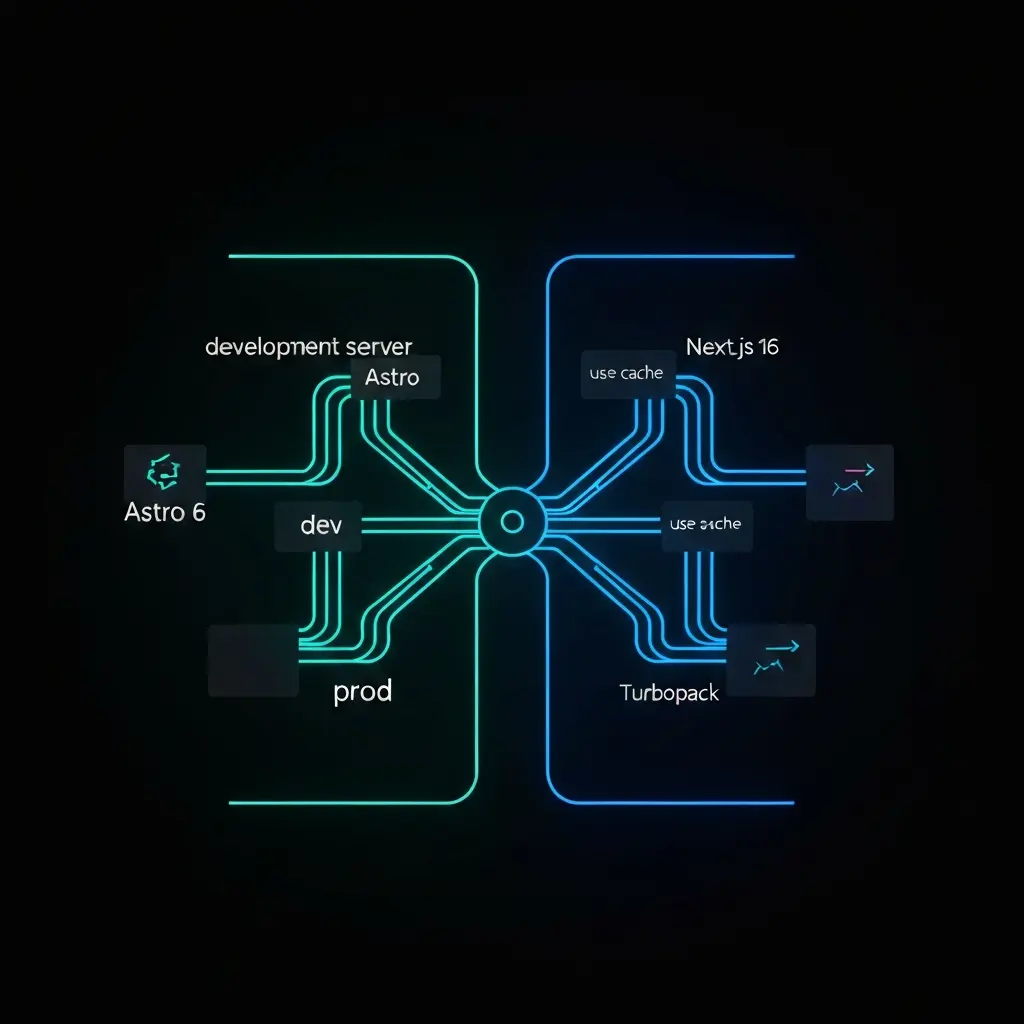
Astro 6 Beta and Next.js 16 Stable deliver a major shift towards explicit data governance and absolute runtime parity, fundamentally changing how frontend teams build and deploy.
The 2026 framework releases mark a shift from performance-only optimisation to secure-by-default architectures with real-time data orchestration through stable Content Layers.
The January 2026 releases of Astro 6 Beta, Next.js 16, and SvelteKit establish a new benchmark for performance and security by unifying development and production runtimes.
Cloudflare's acquisition of Astro and the Next.js 16 release signal a fundamental architectural shift towards edge-native development with perfect runtime parity, ending local-to-production discrepancies.
The 2026 'Runtime Fidelity' shift sees Astro 6 and Next.js 16 unifying dev and production engines to eradicate 'works on my machine' bugs.
Analysing the 2026 web stack shift, driven by Svelte 5.46's CSP hydration and Astro 6's Build Adapters, towards secure, AI-ready edge-native architectures.