· Web Architecture · 5 min read
The 2026 Mobile Architecture Shift: Beyond the Bridge
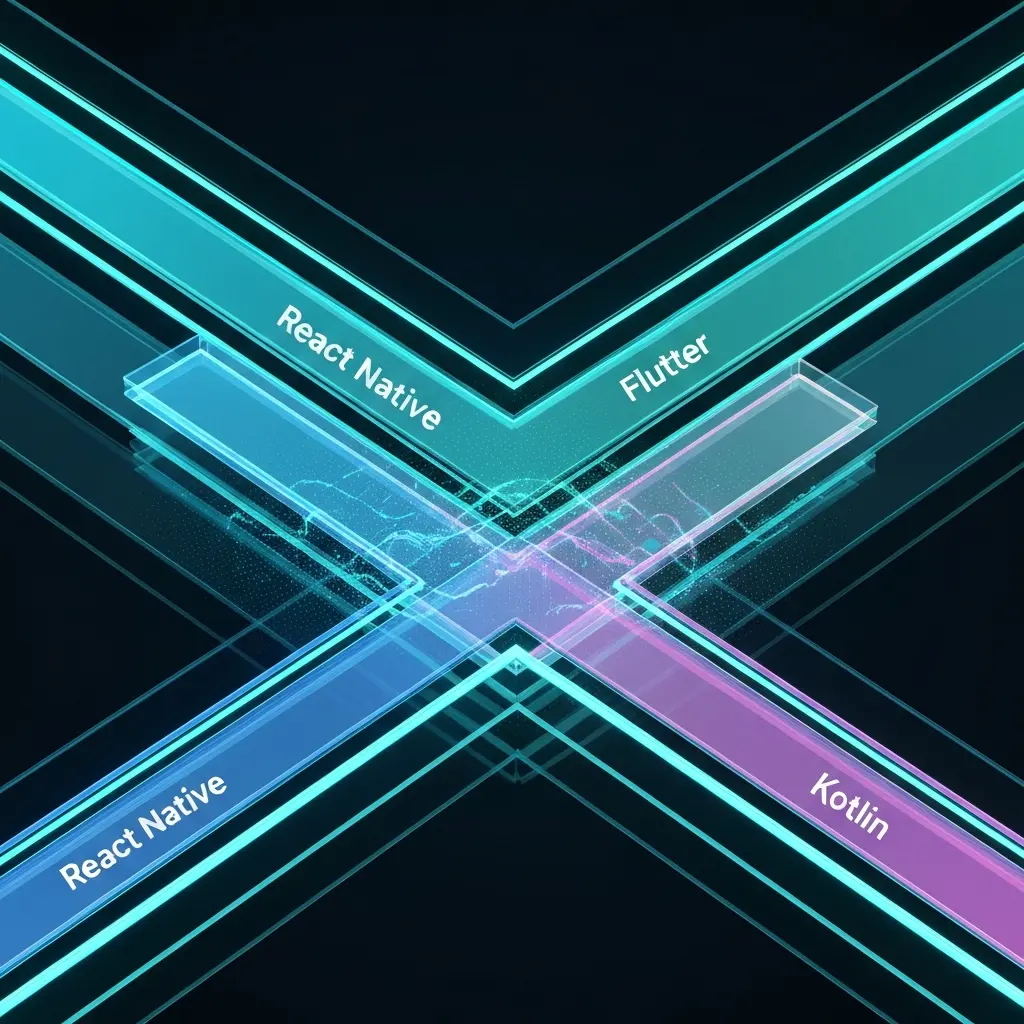
The mobile development landscape has moved beyond bridges, embracing direct memory access, WebAssembly, and platform-native concurrency for unparalleled performance.

TL;DR: The mobile development paradigm has shifted from asynchronous bridges to direct memory access via JSI and FFI, WebAssembly compilation, and platform-native concurrency enforcement. This eliminates serialisation overhead, delivers native performance in cross-platform code, and establishes Kotlin Multiplatform as the standard shared logic layer.
Introduction
For years, the bridge was the cornerstone of cross-platform mobile development, a necessary conduit for communication between JavaScript and native code. This architecture, however, imposed a significant cost: the serialisation and deserialisation of every message created latency and consumed valuable CPU cycles. The 2024-2025 release cycles of Flutter and React Native initiated a fundamental rethink, culminating in the industry’s current ‘Post-Bridge’ era. Today, frameworks leverage direct C++ memory sharing and mature WebAssembly to merge native performance with cross-platform velocity, rendering the traditional bridge obsolete.
What is React Native Bridgeless?
React Native Bridgeless refers to an architecture that eliminates the asynchronous JSON bridge, utilising the JavaScript Interface (JSI) to allow synchronous, direct calls to native APIs. This provides direct memory access, removing the 20% performance overhead previously caused by serialisation. It represents the final maturation of the TurboModules initiative, creating a truly unified execution environment.
The Mechanisms of Direct Memory Access
The shift from bridge-based messaging to direct memory access is the defining technical change. In React Native’s Bridgeless mode, the JSI enables JavaScript to hold references to, and invoke methods on, C++ host objects directly. This bypasses the serialisation queue entirely.
// Example JSI host object binding (conceptual)
jsi::Value getSensorData(jsi::Runtime &rt, const jsi::Value &thisVal, const jsi::Value *args, size_t count) {
    // Direct access to native sensor API
    return jsi::Value(rt, NativeSensor::readCurrentValue());
}
Flutter achieves analogous results via its Dart FFI (Foreign Function Interface), which allows Dart code to call directly into C libraries, enabling zero-overhead communication with platform-specific hardware. The business value is clear: complex interactions, such as processing high-frequency sensor data or rendering intricate animations, now perform at native speed within a cross-platform context.
Pro Tip: When designing new modules, favour synchronous, idempotent APIs. The direct invocation model makes complex, stateful callback chains more difficult to manage.
The WebAssembly Performance Standard
WebAssembly (Wasm) has matured from a web novelty to a mobile performance cornerstone. Flutter’s ability to compile to Wasm for web targets is now the production standard, delivering a 2x to 3x performance increase in frame-rendering and complex calculations versus legacy JavaScript compilation. This is not merely a web concern; the efficiency and portability of Wasm binaries influence toolchain design across the ecosystem, promoting more aggressive Ahead-of-Time (AOT) compilation strategies even for native mobile targets. The resultant performance gains directly translate to lower battery consumption and smoother user experiences.
Why Does Kotlin Multiplatform Matter for Shared Logic?
Google’s official backing has solidified Kotlin Multiplatform (KMP) as the primary choice for the enterprise ‘shared logic’ layer. Its value lies in standardisation. Commonised libraries for Room (persistence), DataStore, and ViewModel now support 100% code reuse for critical data handling and business logic, while the UI remains platform-specific. This architectural separation is key.
// Shared KMP module providing a common repository
class NetworkRepository(private val api: CommonApi) {
    suspend fun fetchData(): CommonDataModel {
        // Logic written once, used on iOS & Android
        return api.getData()
    }
}
It allows teams to maintain a single, rigorously tested core of application logic, reducing bugs and development time. The investment in KMP tooling by major ecosystem players ensures its longevity and continued optimisation.
Concurrency and Safety as Foundation
Swift 6’s enforcement of strict concurrency checks at compile time has permeated the iOS ecosystem, mandating data-race safety. This architectural mandate drastically reduces a class of runtime crashes previously common in high-concurrency mobile applications. The discipline it imposes – clear actor isolation and sendable type guarantees – influences broader mobile design patterns, encouraging more robust state management even in cross-platform frameworks that interact with these native modules. Safety is no longer an optional optimisation; it is a foundational requirement for stable applications.
The 2026 Outlook
The architectural trends established in 2025 will solidify in 2026. We will see the complete deprecation of legacy bridge APIs in favour of direct JSI/FFI invocation. WebAssembly will expand beyond Flutter web to influence on-device binary formats for AI models. Kotlin Multiplatform will become the uncontested standard for shared business logic, with compiler improvements further blurring the line between shared and native code. Finally, the enforcement of concurrency safety by Swift 6 will set a new benchmark, pushing similar rigorous models into other platform languages and framework interop layers.
Key Takeaways
- Eliminate Serialisation Overhead: Architect new modules using direct JSI (React Native) or FFI (Flutter) for native API access.
- Adopt Wasm Targets: Utilise Flutter’s WebAssembly compilation for web-based deliverables to secure significant performance gains.
- Standardise Shared Logic: Implement business logic and data persistence layers using Kotlin Multiplatform for maximum reuse and reliability.
- Enforce Concurrency Safety: Adopt Swift 6’s strict models for iOS code and promote similar discipline in all asynchronous design.
- Utilise Modern Rendering: Leverage the Impeller engine on Android and Yoga 3.0 layouts to eliminate rendering jank and achieve CSS-parity.
Conclusion
The mobile architecture shift beyond the bridge is a move towards uncompromised efficiency and robust foundations. By embracing direct memory access, WebAssembly, and platform-enforced concurrency, developers can now build cross-platform applications that deliver truly native performance and stability. This evolution demands a reevaluation of existing codebases and a forward-looking approach to new development. At Zorinto, we help clients navigate this precise transition, architecting systems that leverage these modern paradigms for sustainable competitive advantage.