

Hono on Cloudflare Workers
Hono API development: UK
We build typed edge APIs with Hono on Cloudflare Workers: D1 and R2 bindings, rate limiting, Zod contracts shared with your frontend and CLI, and uploads streamed straight to storage. We run this stack in production ourselves, and we will tell you when it is the wrong tool.
What we build with Hono
The API work we do most often on Cloudflare Workers, from a single service to a full product backend.
A Hono application on Workers with typed bindings, so a missing D1 database, R2 bucket or rate limiter is a compile error rather than a production surprise, and one central error handler for every route.
Metadata in D1, files in R2 and native Workers rate limiters on the routes that need them, all wired through the Worker with no separate servers to patch.
Request and response schemas in a shared package, used by the API, the web app and command-line tools, so every side agrees on the shape of the data and a contract change fails the build.
Large files streamed through the Worker into R2 multipart uploads with exact length enforcement and resumable parts, so a dropped connection costs one part, not the whole file.
Workers wrapped with Sentry for error tracking, and emails and logging handed to waitUntil so they never hold up a response.
Automated suites that cover routes, validation, billing and abuse controls, run on every change, so refactors and new endpoints ship with confidence.
Proof, not theory
Hono in production: Dropvi
We use it for our own product
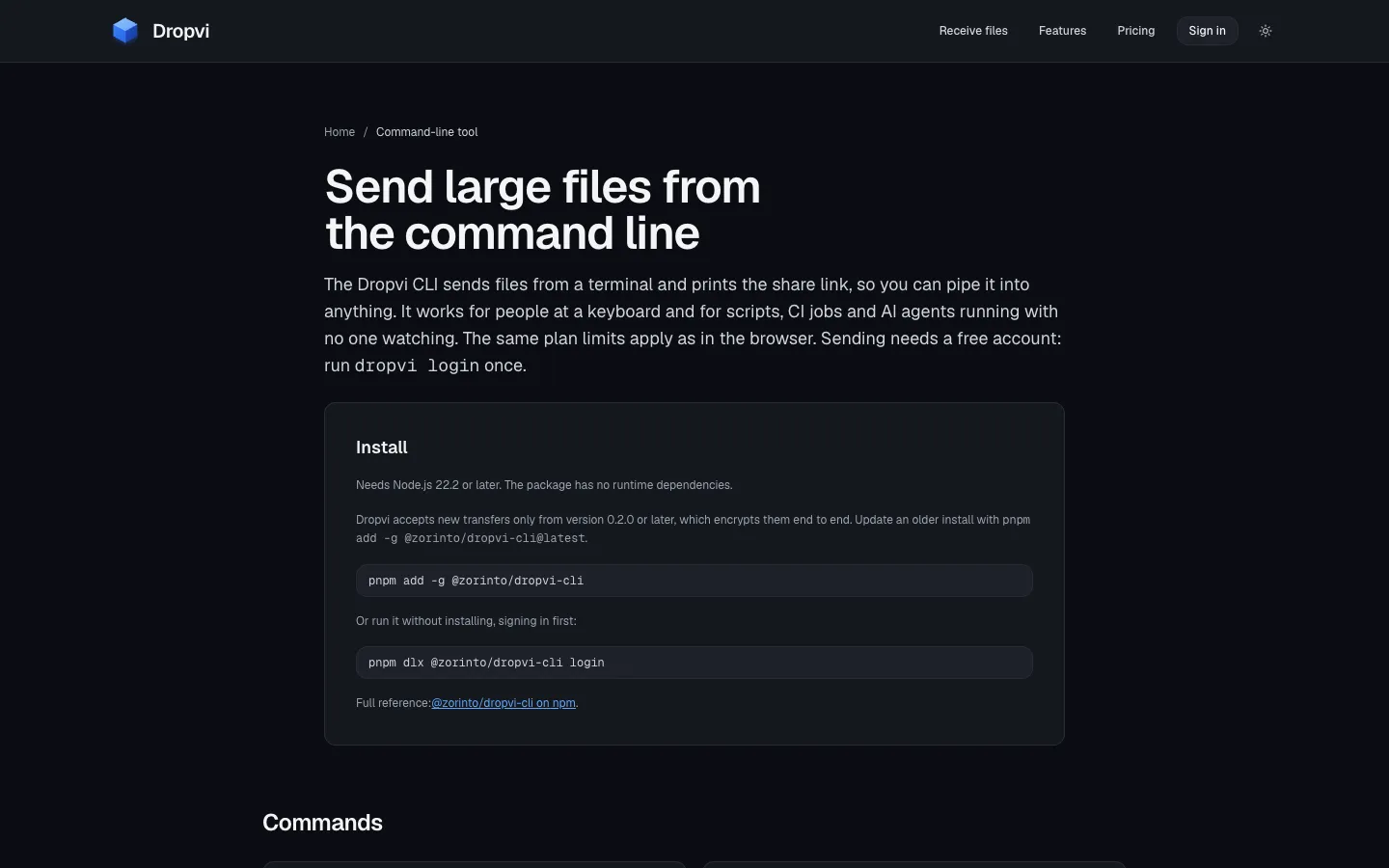
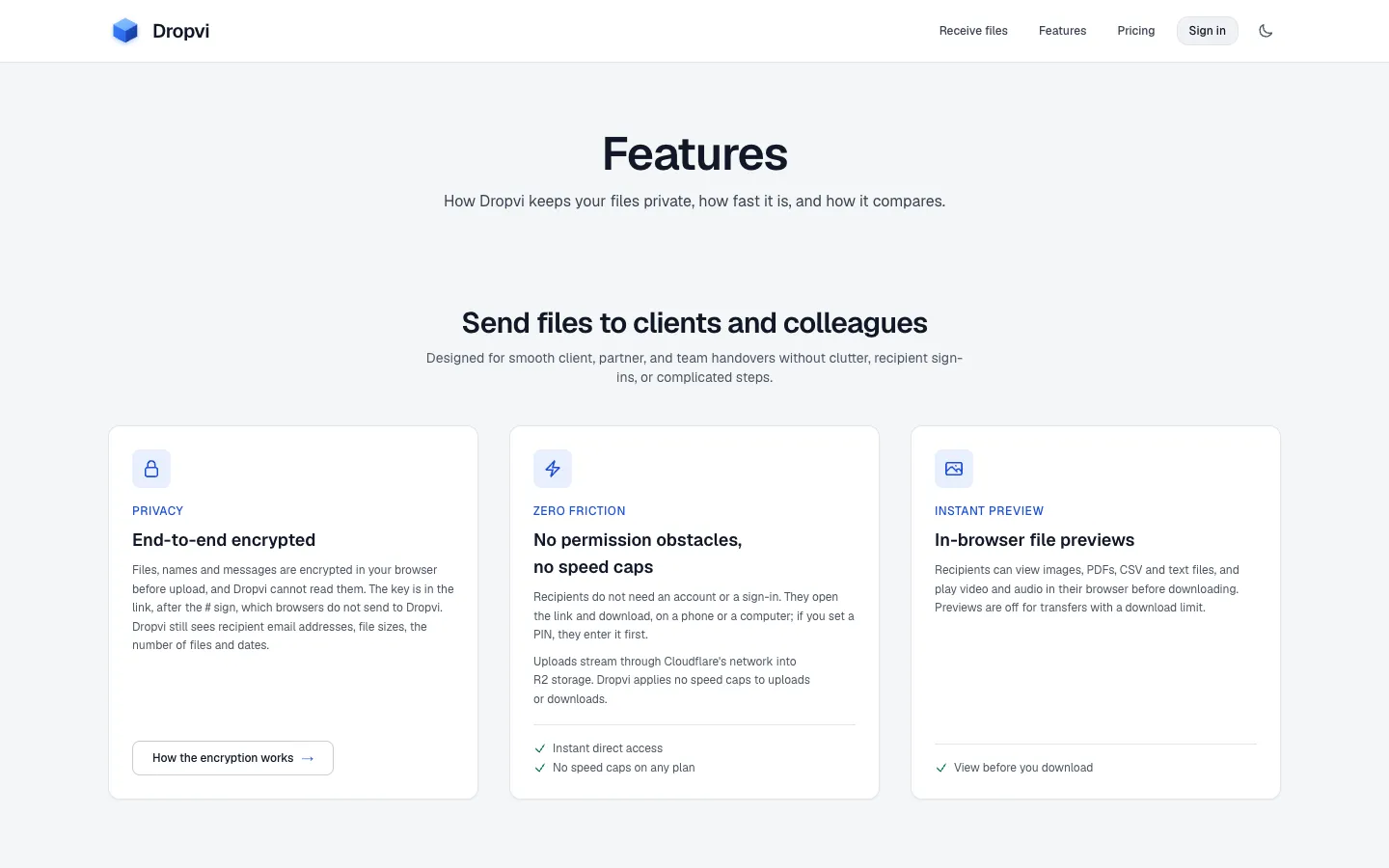
Dropvi is our own large-file transfer service, and Hono is its API layer. We chose it because it is a small, typed framework that runs natively on Workers and lets an upload body pass straight through to R2, which is what makes a generous free tier workable. Recent features such as request links, where anyone can send encrypted files to a customer, were built on the same app, with per-part quota reservation in a single conditional D1 insert.
Read the full story in the Dropvi case study, or see ourSaaS development service for the wider product build.
One typed app, many routes
Dropvi’s API is a single Hono 4 application on Workers serving 84 routes, with typed D1, R2 and rate-limiting bindings, a global CORS function that covers customers’ branded subdomains, and one central error handler.
Uploads that stream
Parts are streamed through a fixed-length stream into R2 multipart uploads, 16 MiB by default and up to 90 MiB, with a state route so interrupted uploads resume from the first part not yet stored.
Contracts shared three ways
Zod schemas in one package are used by the API, the Astro and Svelte web app, and a published command-line tool. The API has 854 passing tests in 46 files.
How we deliver
A short, sprint-based process that keeps scope fixed and every release small enough to review.
Discovery & fit check
We map your routes, data and integrations, and check that Workers suit them. If a long-running job or a Node-only dependency points elsewhere, we say so before any build starts.
Contracts first
We write the Zod schemas for the main requests and responses and agree them with your frontend or CLI team, so everyone builds against the same typed shapes.
Sprint build with preview deploys
Two-week sprints with a deployed Worker from the first week, so you call the real API rather than review a document.
Hardening & launch
Vitest coverage on critical paths, rate limits on abuse-prone routes, Sentry error tracking and a review of every binding, all in place before go-live.
Support & iteration
Retainers cover dependency updates, security patches, new endpoints and monitoring once real traffic arrives.
Hono API development FAQs
The questions UK teams ask us most often before starting an API on Cloudflare Workers.
How much does Hono API development cost?
It depends on the number of routes, the integrations (payments, email, third-party APIs) and how much of the data model already exists. Every engagement is scoped and fixed-priced after a short discovery, so you know the number before we write code. See our pricing page for how we price across services.
Why Hono rather than Express, Fastify or Next.js API routes?
Hono is a small TypeScript framework built on web-standard Request and Response objects, so it runs natively on Cloudflare Workers with nothing to adapt. That matters for uploads: a body can be passed straight through to R2 without being buffered in memory. If your API needs a long-running Node process, a mature ORM ecosystem or heavy background jobs, we will say so and suggest Laravel, Django or Rails instead.
Is Cloudflare Workers the right place for my API?
Often, but not always. Workers suit request-and-response APIs, file handling through R2, and products that should cost close to nothing at idle. They are a poorer fit for long-running jobs, large in-memory processing or code that depends on Node-only libraries. We check this against your requirements in discovery, before any build starts.
Can you add a Hono API alongside an existing frontend or backend?
Yes. A typed Hono API can sit behind an Astro, React or Svelte frontend, or in front of an existing database or service. Zod schemas in a shared package let the frontend, a command-line tool and the API agree on the same request and response shapes, so a contract change fails the build rather than production.
Do you provide testing, monitoring and ongoing support?
Every API we build comes with an automated test suite (we use Vitest) and error tracking through Sentry, set up before go-live. We hand over full ownership of the repository and the Cloudflare account, and can stay on for support retainers covering dependency updates, security patches and new endpoints, cancellable with 30 days notice.
Start your Hono API project
Tell us about your API, product idea or existing backend; we respond within one working day. Prefer a full-stack framework? See our Next.js service too.